Saturday, March 30, 2013

The Napoleon of Coaching

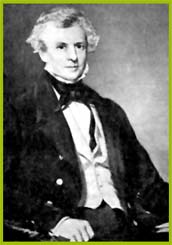
Chaplin, William James (1787–1859) was born on 3rd December 1787 at Rochester, Kent, the son of William Chaplin, a coach proprietor on the Dover road, and his wife Eleanor Mountain.

Chaplin was educated at Bromley, and on 11 July 1816 married Elizabeth Alston at St Nicholas, Rochester.

Whatever Chaplin did, he did thoroughly. He and Elizabeth had sixteen children:


Eleanor – 1817 – 1865
Sarah – 1819 – 1870        } twins
Marianne – 1819 – 1879    }
Rosa – 1821 – 1829
William Augustus – 1822 – 1896
Horace – 1824, died in infancy
Horace – 1826 – 1907
Alfred – 1827 – 1901
Isabel – 1828 – 1871
Caroline – 1829 – 1886
Ernest – 1831 – 1902
Edwin Charles – 1833 – 1860?
Rosa – 1834 - ?
Eustace de St Pierre – 1835 – 1879
Percy – 1837 – 1891
John Worthy – 1840 - 1920

Pollard's depiction of Mail Coaches leaving The Swan With Two Necks
In business too, Chaplin’s thoroughness carried him to the forefront. About 1823 he succeeded William Waterhouse at the Swan with Two Necks inn, Lad Lane, London, and by 1827 his coach business employed 300 to 400 horses, which by 1835 had risen to 1,200.

The inn was built on the classic plan of a central yard with galleried buildings around it – the kind of inn Shakespeare would have been familiar with as a venue for staging plays. Building space, however, was non-existent around the outside of the Swan so the stables for the horses were underground.


Chaplin owned other London inns: the Cross Keys, the Spread Eagle in Gracechurch Street and the White Horse in Fetter Lane.

He had extensive stables at Purley, Hounslow, and Whetstone, and was said to employ 2,000 people. In 1836 he had 92 coaches leaving London every day, serving all the main roads from the city, to all points of the compass. He horsed 14 of the 27 mail coaches leaving London each night, including Exeter, Wells, Poole, Port Patrick, Stroud, Liverpool, Falmouth, Pembroke, Holyhead and Devonport. His annual turnover was said to be £500,000.

According to Thomas Cross, one of his former coachmen: ‘Downright industry, and a systematic application to business, in which the female members of the family were called to assist, formed the foundation of his elevation’; he had excellent knowledge of both horses and men, and ‘an intellect superior to most of his class in shrewdness and tact, and this with a soft, oily expression, that procured for him the soubriquet of “Bite 'em sly”.’

The Edinburgh to London Royal Mail Coach
Harris, writing in 1885, stated that he had never heard any of Chaplin's former coachmen or guards speak ill of him.

According to the Dictionary of National Biography Chaplin lived “at a hotel he owned in the Adelphi”. The addresses recorded for the births of his children show the movements of the family. Eleanor, the eldest, had been born at Rochester, before they moved to London. The twins Sarah and Marianne were born at Gracechurch Street, as was Rosa, who died aged only 8; so was William Augustus who was to follow his father into innkeeping at the tender age of 17.  Presumably the Gracechurch Street address was either the Spread Eagle or a house very close by. By 1824 the family had moved to 1, John Street, Adelphi, much further “up West” where the next 8 children were born. 

Eustace in 1835 was the odd one out as he was born at the Kingston Hotel in Calais. Although October might seem a little late for the family to be en route to or from a holiday, Chaplin wrote to a fellow coaching contractor on 27 December 1835: “yr letter came on the Eve of my departure for a holiday, and I carried it to the Alps, thinking to catch an Evening to give you my sentiments on yr suggestions… I returned in Octr & thought yr letter as well unanswered till…Decr” Possibly Chaplin had also been distracted from his colleague's letter by the concerns of travelling with a newborn baby.

In 1837 Percy was born back at 1 John Street, Adelphi, and finally offspring number 16, John Worthy, was born at 1 Royal Terrace, Adelphi. I’m not sure whether this simply reflects a name-change for John Street or whether it shows a move to a new address in the same very small district. However, John’s middle name does reflect the friendship between Chaplin and his business partner Benjamin Worthy Horne, with whom he established the railway carrying firm of Chaplin and Horne.

There are a few anecdotes about Chaplin in his business life which have been recorded by coachmen and businessmen who worked with him. He wasn’t above driving his own horses, which apparently he did very well. One day George Denman, toll collector at Kensington Gate, issued Chaplin a toll ticket bearing the improper amount for his coach. During the ensuing argument Denman took hold of the horses and Chaplin used his whip to make Denman let go. He was summonsed and later fined 12s and court costs.

Chaplin in his turn censured a well known coachman for driving a team out of the Swan with Two Necks in ring-snaffles instead of the more severe curb bits, and told him if he did it again he would lose his position. He was sharper still with a man whom he suspected of stealing oats overnight: he lay in wait inside the corn-bin and when the man lifted the lid Chaplin jumped out, pitched into him and sacked him there and then.

However, like most coach proprietors he turned a blind eye to the practice of “shouldering” – driver and guard taking fares from customers on the coach without entering them on the official waybill. When he presided over coaching dinners for his drivers it was considered a good joke that he proposed “Shouldering” as a toast.

Because he ran large businesses in London, Chaplin’s name crops up occasionally in Old Bailey records of the period. On 12 April 1824  Edward Archer was indicted for stealing “seven 5l. Bank notes, and five hundred 1l. Bank notes , the property of William Chaplin and others, his partners.” A case that was heard in May 1838 gave me the name of Mr Ibbotson, the head book-keeper at the Swan with Two Necks, during the conviction for fraud of Sharpe, a booking clerk. I made use of Sharpe’s departure to switch Sarah into my story in his place. 

Chaplin was known to grumble about the actual profits he made, stating in 1827 that, “I have not a shadow of a doubt that, were the coaching account of the nation kept regularly, the whole is decidedly a loss and the public have the turn.”

Another coaching proprietor, Thomas Cross (Autobiography of a Stage-coachman) – like many others – failed in business due to the railway boom. He petitioned the House of Commons for help in 1845: “in passing any Bills having reference to railroads, in some or one of them such provision shall be made as shall prevent your petitioner and his family from coming to the extreme of misery.”  Chaplin, however, had already clearly anticipated the effect of the railways on his business, and in 1838 he had pre-empted the difficulty with characteristic thoroughness. He sold most of his coaches and horses. He left the proceeds of the coaching sales on deposit, and went off to Switzerland for six weeks, according to the National Dictionary of Biography, to “contemplate his future.”

Since Chaplin was probably still in England in May 1838 when the last Mail Coach Procession took place – at any rate he hadn’t sold out his interests in the Mail Coaches at that point – I suppose that he must have gone to the Alps later in the year. The Post Office had by then transferred a large amount of its Mail business from the coaches onto the new railways.

I wondered when I was writing COACHMAN whether Chaplin took all his huge family abroad with him at that time. For instance, he had retained his inns; it seemed reasonable to speculate that for the sake of giving his elder children experience in business he might leave them in charge there. William, for instance, was certainly named as the landlord of the Swan with Two Necks the following year, when he was only 17. The National Dictionary of Biography says that Chaplin “ensured that no business communications could reach him” while he was abroad in 1838. I exploited this interesting break in his family pattern as an opportunity for his daughter Sarah to pursue my hero George!

On his return Chaplin invested a large sum in the London and Southampton Railway (later the London and South Western Railway, or LSWR). By 1840 he was its vice-chairman and in 1843–52 and 1854–8 he was chairman and guided the company through its formative years.

In 1840 Chaplin and Horne became agents to the Grand Junction Railway, and from 1847 the company shared an exclusive goods and parcels agency with Pickfords on the London and North Western Railway (LNWR). Chaplin retained a share in this until his death on 24 April 1859.

He was buried at Strood, Kent.
~~~~~~~~~~~~~~~~~~~~~~~~~~~~~~~~~~~~

Victorian Historical Novel - COACHMAN - http://www.jackdawebooks.co.uk/coachman.htm

"K M Peyton meets Malcolm MacDonald."

Good-looking and ambitious George Davenport travels to London with his bride Lucy, determined to make the most of his skill in driving a four-in-hand of horses. It’s 1838. Queen Victoria is crowned, and England is at peace, but it isn't a good time to be a coachman.

As George finds employment with William Chaplin, the “Napoleon of coaching”, the first railways are about to open across the country. Their competition will kill off the road-coaching trade. George loves both his work and his wife, so he has a lot to come to terms with… even before the boss’s daughter starts to stalk him.

~~~~~~~~~~~~~~~~~~~~~~~~~~~~~~~~~~~~~

Sources 
Dorian Gerhold, ‘Chaplin, William James (1787–1859)’, Oxford Dictionary of National Biography, Oxford University Press, 2004 [http://www.oxforddnb.com/view/article/47556, accessed 19 April 2007]
S. Harris, The coaching age (1885)
T. Cross, The autobiography of a stage-coachman, 3 vols. (1861)
C. G. Harper, Stage-coach and mail in days of yore, 2 (1903)

The Proceedings of the Old Bailey, 1674-1913 [http://www.oldbaileyonline.org/ accessed 30 March 2013]

Wednesday, March 27, 2013

A Very British Blog Tour.

A Very British Blog Tour


Authors, Nancy Jardine, Mark Patton and Ailsa Abraham have invited a group of British authors to take part in ‘A Very British Blog Tour.’ 

Q. Where were you born and where do you live at the moment?


I was born in Cheshire, in the village of Bebington on the Wirral Peninsula which sits on the map like a tilted rectangle between Liverpool's River Mersey and Chester's River Dee.

Wirral is historically a marginal area, with placenames partly Anglo-Saxon and partly Viking. Wallasey, the northern corner, was quite separate and its name means "the Island of the Strangers" so I assume the earlier blokes and their families holed up there when the invasions happened - and that it's nothing to do with my Nanna living there!

People think of Wirral as a dormitory for Liverpool and Chester but it has a distinct character that in some ways is more related to the northern corner of Wales, where the local accent, for instance, is noticeably not Welsh but a mix of Scouse and Cheshire. For a while we were postcoded through Liverpool but it has now reverted to Chester.

There is an enormous list of famous people who were born or lived on Wirral in their formative years: it includes Daniel Craig (yes, Mr Bond), presenter Fiona Bruce, sportsmen Matt Dawson, Austin Healey, Chris Boardman and Ian Botham, poet Wilfred Owen, cartoonists Bill Tidy and Norman Thelwell, actors Eric Idle, Glenda Jackson, Jan Ravens and Pat Routledge; not forgetting Emma Hamilton, the mistress of Admiral Horatio Nelson; and Georg Frideric Handel who sailed from Parkgate en route to Dublin for the premiere of his oratorio Messiah.

That list is by no means comprehensive - so I have a lot to live up to.

Q. Have you always lived and worked in Britain or are you based elsewhere at the moment?


I've always lived in England. However, I was startled to find that I'm rather a mongrel! One of my forebears was a Lancastrian ironfounder, one a Liverpool shipowner, one probably of Irish descent who came from London to make candles at Price's Bromborough Pool Works, and still another was a German diplomat with a French wife, whose son (my great-grandfather) was by turns a coaling merchant in the Canary Islands, a newspaper editor, a foreign correspondent, and a Liverpool detective (a policeman, not a defective!)

Q. Which is your favourite part of Britain?


Where I live now, between the Lake District and the Yorkshire Dales, though I'm very fond of Chester. I love the sudden appearance of the Howgill Fells when I'm coming home on the M6. They are strange hills, quite different from the cragginess of the Lake District or the limestone sweeps of the Dales. Alfred Wainwright called them "sleeping elephants" though for most of the winter their rounded, wind-scoured grasslands are lion-tawny in colour rather than the grey that A.W's phrase conjures up.

Q. Have you ‘highlighted’ or ‘showcased’ any particular part of Britain in your books? For example, a town or city; a county, a monument or some well-known place or event?


I set "Against the Odds" on the Wirral and in Chester, with a major scene taking place on the City Walls and at the Roman soldiers' shrine of Minerva on the other side of the River Dee at Handbridge.

The first third of "COACHMAN" is set in Carlisle, around the Cathedral, the Crown and Mitre coaching inn, the Post Office, McReady's Theatre and the Blue Bell. Of course the area has been re-built more than once since then. Of the theatre, only the facade survives, and although the Crown and Mitre is still thriving it doesn't look at all like the original.

The event that I showcased in the later part of the book was the opening of the London-based railways in 1838, which resulted in the now forgotten collapse of the horsedrawn coaching trade.

"The Forthright Saga" is more loosely set in "a" Cumbrian market town, but I refer to it as Dangleby and I'm not going to divulge which town it's based on!

Both "COACHMAN" and "The Forthright Saga" have been entered for the Lakeland Book of the Year Awards on the basis of their locations.

Q. There is an illusion - or myth if you wish - about British people that I would like you to discuss. Many see the ‘Brits’ as ‘stiff upper lip’. Is that correct?


I don't think it is. I am moved to tears by weddings as well as funerals, and very often by music, yet I know some people who are not touched at all by any of these things. People are people, with different upbringings and experiences, and they vary immensely in their emotional range and reactions. You can't paint all British people as being like public face of the Royal Family. Some of them are more like the family of Mrs Brown, the Royles, or Citizen Khan.

I am not saying I'm one of those who will confide personal secrets to strangers or strip their souls naked for TV cameras, but nobody watching a British football crowd or the spectators at the Grand National or the audience at The Last Night of the Proms would ever call them "reserved"! Still, my husband doesn't cry and there are times I'd really give a lot to be able to stand back like that!

Q. Do any of the characters in your books carry the ‘stiff upper lip’? Or are they all "British Bulldog Drummond” sorts?


I tend not to categorise them that way. They may be reticent about telling other people about what's going on in their heads - but that doesn't mean they are cliches who are unmoved by pain or unsympathetic to what others are feeling. My lead female character in "Against the Odds", for instance, suffers badly from being unable to verbalise her emotions. In "COACHMAN" the young wife has a secret that she doesn't tell her husband until a long way into their relationship.

Q. Tell us about one of your recent books?

In COACHMAN, George Davenport is a young English driver, born and bred to the trade, whose skills are at their height during the “Golden Age of Coaching” in the 1830s. He’s moved about the country to gain experience and better himself and at the beginning of the novel he is on his way from Carlisle to London hoping for a share of the lucrative trade in and out of the capital. For the first time in his life, though, he’s got someone else to consider – his landlady’s daughter Lucy Hennessy, to whom he has proposed marriage. Lucy has a rough background – how rough, George doesn’t find out until much later. The tensions in their relationship, and others’, are about the conflicts of work and money versus love and responsibility.  

Q. What are you currently working on?


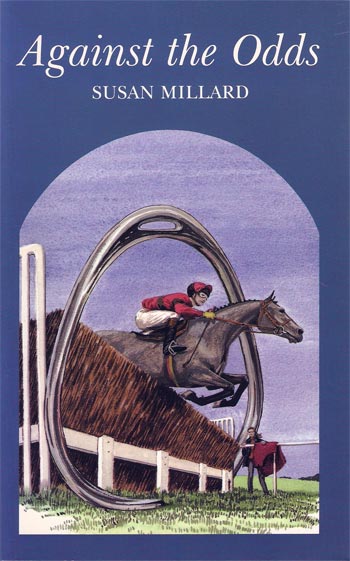
cover of Against the Odds
I'm preparing to work with an editor on a poetry pamphlet, "Ash Tree" which Prole Books have accepted for publication later this year. I'd known Brett and Phil for some time via the Great Writing Web site which Phil and I moderate. They have published several of what I've called "The Naomi poems" about the terminal illness of my grand-daughter who died in 2010. I was reluctant to offer them the whole sequence for fear of seeming to presume on their friendship. However, they have been very enthusiastic and I'm looking forward to working with Brett to polish the collection.

Having re-released "Against the Odds" this year as a digital edition, I'm working on a sequel. Twenty years on, my characters have developed and changed. Then they were working in racing, and expecting to move from racing and training into breeding racehorses. That hasn't gone to plan, and they've had to move north into a less affluent agricultural area of Cumbria. With their children now in their late teens and becoming ambitious themselves, there is plenty of scope for explosions!

Q. How do you spend your leisure time?


When I'm not writing or designing web sites, I carriage-drive one or other of my two Fell ponies, Ruby and Mr T.

 I also enjoy playing the harp - not a gilded concert monster, I hasten to add! When I was a teenager I used to sing in a folk band, and this is a folk harp with 34 strings. It stands about 3 foot 6 (1 metre) tall and makes a most lovely sound.

Q. Do you write for a local audience or a global audience?


*whispers* I write for me. I write the books I would like to read, and just hope that other people also enjoy them.

Q. Can you provide links to your work?


Of course! All the following pages have links to purchase and/or read a sample on Amazon.

COACHMAN

The Forthright Saga

Dragon Bait

Against the Odds

One Fell Swoop

Hoofprints in Eden


Other authors who are taking part in this blog hop


Geoff Smith

Helen Riebold

Linda Gruchy


Monday, March 25, 2013

Historical Novelists' 4 Day Book Fair, 12 - 15 April 2013

Historical Novelists' 4 Day Book Fair


Blogfest coming up!

I'm preparing a post in order to join in the Historical Novelists' 4 Day Book Fair.

And don't forget that the digital editions of COACHMAN, THE FORTHRIGHT SAGA and DRAGON BAIT are at a discounted price on Amazon until the end of the Easter holidays: $2.99 or the GBP equivalent of approx. £2.72. Curl up by the fire and enjoy driving a Victorian coach, flying with a dragon, or solving a Cumbrian crime without getting cold!

Sunday, March 24, 2013

Interviewed by Maria Grace

Maria Grace has kindly featured an interview with me on her blog "Random Bits of Fascination"


Tuesday, February 5, 2013

Non Fiction – Some Techniques and Ethics


I am not going to pretend I know all about writing non fiction, although it is the genre in which I have had most success. Basically, I have written about what I know, or what I could find out, and since I have specialised in equestrian matters, this is where my work has been published. Carriage Driving and Native Pony magazines, and small specialist publishers, have taken and paid for my work over the years.

While non fiction is for me the easiest route to publication, it’s not without its drawbacks. For a start, you have to know what you are talking about, which makes it a long haul: I have been interested in horses since I was two and a half, got into riding and working with them (usually unpaid) from sixteen, but didn’t have a pony of my own till I was twenty-eight. Until then, I had just one non-fiction piece published for money – an account of an unusual riding lesson, which earned me ten guineas from Light Horse when I was seventeen.

Actually, putting that on paper is rather sobering. Perhaps if you write fiction for ten years before achieving any publication you are doing better than I did. So take heart!

“Hoofprints in Eden”, published by Hayloft in 2005, was two years in the making. By the time I got around to writing it I had 35 years of horse experience behind me (and happy to admit that in many areas I am still a novice) but I had one priceless asset: I lived, and still do, in the homeland of the Fell pony breed about which I wanted to write. I also had the experience of writing for the specialist magazines, which had taught me how long it took to gather material for an article, and therefore I was prepared for a long haul to get the information I wanted to put into the book.

“Hoofprints” is not just about ponies. I wanted to get the real voices of the people who breed them, the language and the background and “The Knowledge”. As it happens, the Fell pony breed is becoming known world-wide, but the export of stock does not carry with it the sort of information which you can hear at a Cumbrian horse sale or a pony show. I knew, from questions that were put to me in other capacities, there was a need for knowledge among those who had taken ponies to their home countries, Germany, France, Holland, Sweden and (the most difficult and opinionated of all) North America. Now, I am not a native Cumbrian but an import from Cheshire, so if I were to write just in my own voice, to advise on the keeping and the history of the breed, it would not go down well with my neighbours. They were not only born here but bred to the keeping of Fell ponies, as were their fathers and the generations before that. I might sell a few copies of the book, but I would never be welcome to write another. Therefore, I had to think of another approach.

As you will have gathered, I do have some experience of ponies. But those whose opinions I valued had the inherited knowledge of decades, even centuries, behind them. I decided I would interview those whose record in the Fell Pony Society Stud Book showed that they had been breeding the ponies for longer than my own knowledge: at the time, the cut off point was 30 years. That gave me some 20 people to visit. Being already employed (at the local University) I really only had weekends to do the interviewing, so immediately the timescale became a lengthy one, since I would have to spend one day doing the interview and a week of evenings transcribing the conversation into a typescript. Realistically, too, nobody was going to want to talk to me at busy times on their farms, such as lambing, calving, haytime, silage time, or autumn sales. It helped that I’d done all those things myself and knew the farming year from the inside, so could gauge when I would and would not be welcome. I wrote a letter to the 20 people I wanted to listen to.

One person phoned me back agreeing to be interviewed.

5% is a normal response for any mailshot, so I wasn’t disheartened. On a cold, windy Sunday afternoon, armed with the silly questions that I’d collected from overseas and from “outside Cumbria”, I went up into the hill country to interview my first Fell pony breeder.

It was a long and involved conversation, and I was glad of the small cassette recorder which I placed on the coffee table between me and my interviewee. I don’t do shorthand, and even if I did, the writing down of conversations that are largely in dialect would be both difficult and disrupting to the flow, so the recorder was a must.

I do not hide the fact that I’m recording what is said. I make a point of putting the equipment somewhere highly visible, and I encourage the person I’m interviewing to tell me if they want the machine stopped when they get to an area that they don’t want published. It does happen occasionally. I also reassure them that once I have transcribed the interview, I will send them the full transcript so they can strike out anything further that they don’t want printed. Their confidence is of the utmost importance. Tempting though it is to go ahead anyway and write about the odd facts they consider sensitive, I have to respect my interviewees’ wishes. If I revealed in print that Mr X has always had a grudge against Mr Y and will not place his ponies in the show ring, or that Miss A alleges that Mrs Z’s famous stallion was not really bred the way she said he was, not only would I be open to libel suits, but nobody in this tightly knit little world would ever tell me anything again. And even here I’m not saying that those are real allegations, they are just examples!

That interview told me a lot of things. First, there was a huge amount of information to be recorded. Therefore the book was going to be worthwhile. Second, every pony breeder was going to tell me about similar things – how he got started, how long his family had been breeding Fells, what stock he used and where it came from, and accounts of show ring successes and of ponies sold for high prices to foreign millionaires. Up to that first interview I had vaguely thought of writing the book as a series of chapters about the various pony studs, but it became clear that it would be very repetitive and boring to do it that way. Also, as I listened and re-listened to the rich Cumbrian dialect, I realised my book had to retain the speakers’ original words. Who was I, an over-educated offcomer, to rewrite the experience of the people who really knew what they were talking about? “I was there and saw what happened.” I stopped thinking in terms of being a writer, and began to think instead as a producer of a radio programme, where the voices of those who are involved are the ones that tell the tale.

Perhaps a third of the book as it now stands is actual speech from the pony breeders themselves. My task was to select, prune, and present the information they so pithily expressed.

But so far, I have only told you about the first interview. That’s the easy one – where the person you’ve contacted is up for the job and realises that it will be good publicity for his ponies which will translate into sales. The next step was to persuade all the others to take part!

Cumbrian farmers regard every letter as a demand on their time, and those I know don’t use the telephone much except for business. Of my 20 interviewees in 2004/5 only two were connected to the internet – and neither of them used e mail by choice. Knowing all this, fortunately, I also knew that lack of response did not mean lack of interest. I solved the communication problem by telephoning, reminding them of the letter I’d sent, and arranging to meet when it was convenient to them. Two of my interviewees turned out to be really shy, but only one of those, the widow of a famous breeder, refused completely to be interviewed. She said that I should have come to interview her husband while he was alive (in fact I had done so, and produced an article as a result) and, correctly, she did not want her words to be quoted now as if her husband had said them. However, she did let me use a photograph she’d taken of her husband, and as every other person had extensive anecdotes to give me about him, his influence on the Fell pony is threaded through almost every chapter of the book and I feel we’ve done him justice nonetheless.

There were hiccups. One or two people were a touch worried about how I was going to present what they’d said. One elderly gentleman read the transcript I sent him and wrote back courteously that his words were a load of old rubbish and he didn’t want me to use them. I responded by expressing my sincere regret that people would not be able to read what he had said. In my letter I sent him part of a chapter, to show how I would weave in quotations from various breeders, including himself, to make points in the flow of the text. After that he replied that he “should have realised that you knew what you were doing” and he was happy for me to continue!

By that time I had settled on the shape of the book. I began by introducing Cumbria and the background of hill farming. I collected a glossary of dialect terms, which my overseas correspondents could not otherwise have understood; created maps to show where the breeders lived; and introduced the various studs in order of seniority – all based on fact, and calculated not to give any excuse for jealousy or accusations of bias. I used the Fell Pony Society’s own descriptions of the breed to open the chapter on what Fell ponies are like, and discuss its background. The easiest way to continue was to follow the stages of a Fell pony’s early life – from conception, foaling, and growing up, to its sale, education and the uses to which it might be put. Feeding, veterinary considerations, the breeders’ ideal ponies, and the future of the breed, completed a sequence that felt logical and avoided the repetition that had threatened to kill the idea in the initial stages.

The actual writing went on over several months. The business of publication isn’t my main point here, but perhaps I should say that I approached a publisher with an outline and some draft chapters as soon as I had a few interviews to quote. After a meeting, which went successfully, I got on with the writing.

During all this, I was also collecting photographs to illustrate the book. I had many of my own that I could use, I was lent old family photographs by breeders, and the FPS gave me permission to access its archive. Although copyright was not forgotten, it only impinged on the book once when I contacted a photographer in the South of England for permission to use an image he had created. He was touchingly pleased that I had bothered to ask what his fee was – a telling sidelight on the realities of copyright law.

Of course, I did some things wrong. I got two pony names wrong on images and the book made it to press before they were spotted. Unlike publication in an electronic medium, once the print run is done, amendments are no longer possible. Every time I sell a book from my personal stock I have to bung a label on one of the front pages pointing out the errors. Although I only made four small errors in a manuscript of over 60,000 words, believe me, I wish I had not made even those.

Well, that’s the tale. “Hoofprints” has been read in Europe and America as well as Britain, and I know from the feedback I get that it is doing the job it set out to do: new owners of Fell ponies have told me they refer to it as their “Bible”.  I am prouder of that – on behalf of my interviewees – than I am of the award the book won in 2006.

I hope you can see from this that non-fiction writing is both hard work and very rewarding. Maybe it’s something you’d be interested to try.


Saturday, January 19, 2013

Resolution


It’s the first of the year and I’m going to lose weight
so I’ll bounce out of bed when I wake.
I shall weigh all the food that I put on my plate
when I’ve had just one more slice of cake.

It’s the first of the year and I’m planning to write
in a diary backed with gold foil.
I have filled up my pen, but the page is so bright
I’m afraid it is too nice to spoil.

It’s the first of the year and I’m joining the gym;
I shall tone up from tiptoes to crown.
I shall stretch and lift weights and become fit and slim,
but first I shall have a sit down.

It’s the first of the year and I’m giving up booze
since last night, when I fell on the cat.
I’ll try to be sober. Can I be excused
to lift two or three glasses to that?

Friday, December 28, 2012

Classy Language

Vocabulary

For some time I've been increasingly uncomfortable with the language that modern writers put into the mouths of historical characters. While I acknowledge that stories must be written in a style that readers find easy, there are times when a writer's personal vocabulary could benefit from being channelled to mark out a character's lifestyle and personal circumstances.

Georgette Heyer plundered cant and slang dictionaries for her lower-class characters. For example, in The Toll Gate her highwayman Jerry and people who associate with him have a quite different vocabulary from that of Captain Staple, who is the son of an aristocratic family.  (However it's not a good idea to copy Heyer's expressions, because in the same way that modern computer programmers build-in redundant code she also invented her own colourful phrases to check how many rivals were plagiarising her work.)

Historic correspondence

Original letters suggest that even during the Regency and the reign of William IV, everyday polite English between people of the educated class was surprisingly like the language we write today. A glance at the correspondence between William Wordsworth and his wife Mary in the early years of the 1800s, or the letters from 1829 onward between a young lawyer, William Holt, and his fiancee Mary Cox, shows that sentences were typically long, few contractions were used (can't, won't), and the & mark often replaces and. Other than those stylistic points the language isn't noticeably archaic. Most of the time they use the formal "you" when addressing each other, and use "thee" only when writing of more intimate feelings.

Spoken language

There's considerable difficulty for writers in researching spoken language, because recorded conversations even in works such as Mayhew's London Labour and the London Poor are filtered through the author's hand. They are probably a factual record of what was said, but they are not verbatim transcriptions. A further difficulty in composing historical conversations is that regional phrases and dialect would have been even more strongly localised than they are now, yet we don't want to make a character's dialogue totally incomprehensible to modern readers.

U and Non-U

In 1956 the terms 'U' meaning Upper Class and 'Non-U' meaning non-Upper Class appeared in Alan Ross's academic paper for the University of Birmingham: U and Non-U – An Essay in Sociological Linguistics. Nancy Mitford also wrote about these differences in 1956 in Noblesse Oblige.

There are some interesting distinctions made, notably the fact that the vocabularies of working class and upper class were similarly robust and forthright, while it was the middle class who used "delicate" phrases involving euphemisms and French words. This may sound strange, but compare the following lists. Which words will be in the vocabulary of the upper class, and which of the middle class?

loo
lavatory
sofa
napkin
drawing room
supper
lunch(eon)
sitting room
pudding
house
England
vegetables
spectacles
looking glass
sick
underwear
rich
toilet
bathroom
settee
serviette
parlour
tea
dinner
lounge
sweet
home
Britain
greens
glasses
mirror
ill
lingerie
wealthy

Food for thought

While some of the terms above are relatively modern, for historical fiction I hope the point is still clear: upper class characters shouldn't express themselves in fancy language, any more than working class ones should. The characters who do will mark themselves at once as middle class.

Good writing for an English "period" story should reinforce my belief in the society being described, and when the author writes about aristocrats in a way that is unmistakably middle-class, s/he loses my trust. This, in my observation, is a point where a good many modern writers (and especially writers who are not English-born) fall down.

Further reading

http://www.debretts.com/etiquette/british-behaviour.aspx