Showing posts with label Coachman. Show all posts

Tuesday, April 9, 2013

Historical Novelists' Book Fair 12-15 April 2013

 I'm a day or two early - but as I have a really busy weekend ahead I thought posting early would be excusable!  


COACHMAN and 1830s Religious observance

Giveaway 

I will give away a digital copy of COACHMAN to two randomly-selected people who enter, between the dates of 12 and 15 April (Draw to take place on the 16th). Please follow me on Twitter (@jackdawebooks), or like my Facebook page (sue.millard.9) or like my Jackdaw E Books page on Facebook, or if you have already done all those things then please follow this blog and leave a comment so I know who you are and that you are entering the giveaway competition.

I will contact you if you win and ask for your email so I can send the book. Please let me know whether you'd like MOBI format (Kindle), EPUB (Kobo/Sony) or a PDF.  All I ask in return is that when you've read the book you leave a comment on the Amazon UK web site (UK), or the Amazon USA site if that's your location.

Religious Observance in England in the 1830s 


Lucy's religious beliefs 

My heroine Lucy Hennessy has had a rough childhood and adolescence, and until she meets my hero George Davenport she has only one solace that keeps her sane: her religious belief. She is lucky that her mother was tackled by one of the ‘slum parsons’ – a street preacher in this case – who convinced her that Jesus could save them both from their sins.

We may think these days that the Victorian era was a heavily religious one, but in fact Thomas Carlyle wrote in 1838 that his age was one “destitute of faith and yet terrified at scepticism.” A census in 1851 recorded how many people actually attended Church service on Sunday 30 March, and found that roughly 30 out of every 100 people might have good reasons not to attend – for instance the sick, the very elderly and the very young and those who were compelled by the nature of their work to labour or serve on Sundays. Of the remainder, around 40 attended services and 30 did not. I was surprised. 40% may be higher than today’s turnout which has to compete with shopping and car-washing, but it was nowhere near as high a figure as I had expected for the mid-Victorian era.

Although religious convictions and beliefs would have coloured many early Victorian social activities, active Church attendance varied both with social class and geography. Absence was highest in large towns in industrial areas, while attendance was best in small rural communities. A similar pattern appeared in the breakdown between types of church, with rural and small-town communities attending mainly Anglican services and the manufacturing areas favouring Non-Conformist chapels. This social distinction was indicated by describing people as either ‘church’ (i.e. Anglican and middle class) or ‘chapel’ (i.e. Nonconformist and working class).

Ma Hennessy and Lucy ought to be ‘chapel’ by background, but the area of Carlisle in which they live is served by both the church of St Cuthbert and the Anglican cathedral, so Ma has the chance to attend a rather more upmarket place of worship than would be the norm for her class. It doesn’t work of course: at the end of George’s visit to the Cathedral with Lucy and her mother, we see how the middle-class Dixon family look on Ma Hennessy with disfavour. In this case, it isn't so much the social sneer of one class to another, but rather a reflection of Ma's previous history (and you’ll have to read the book to find out what that is!). For my purposes, Ma's ambition means that Lucy received a better education, at the Central School, than many girls of her upbringing, which enables her to write fairly long letters. These keep her in touch with George when he goes ahead to find work in London, and then let her to brag to her acquaintances in Carlisle after she joins him and they are married. And, of course, we peer over her shoulder while she does so...

Lucy Davenport's Journal. 

Kendal, Westmorland, 28 October 1838.


I have a small space of time in which to set some of down my private thoughts - empty time, the like of which I may not have again. Already I have duties in keeping the house and preparing for the birth of Our child. I hope and pray he will be a boy, brave and handsome like his father, but whatever God sends, I know our child will be loved.

When we lived in the Lanes, the street preacher came to show us the Light and he, too, fought to bring our souls to Jesus. That my mother was drawn by him out of her depravity - at least in part - is the greatest reason for my gratitude to God and to His Son. Her nature, alas, is so venal that her conversion was never more than skin deep. Where I would have been content with chapel she must find a church where she might copy fine manners and scrape acquaintance with people above our station. Still I bless that man for bringing us to the Truth of God. When I gave my heart to Jesus all the sins I had been forced to commit were washed away and His armour was put upon me, so that I never again could suffer.

I do not fear my coming labour. I have endured pain before, and cruelty, but I know from the witness of my own life that Jesus will support me. My love: If I should die and leave this world it will only be to wake in the next, in the safety of His arms. I pray for a happy outcome, but if it should turn out otherwise, I leave these thoughts for you, my dearest, and for our little one. I will be in Heaven, where I trust that you may come to me in time and we shall be reunited in the love of God.

I say "I trust" because I know, my dear, how strongly you have fought against any belief in our heavenly Father. I pray nightly that you will come to know Him in all his loving kindness, as I do.


George's scepticism

George is more sceptical about religious belief and observance than Lucy is. His mother, as the daughter of a hard-gambling squire, may well have hoped to raise him in her own family's tradition, as an Anglican. However, his father’s family of skilled horsekeepers belong to the “artisan” class with whom the Anglican clergy are generally unpopular because they cling to the declining political High Tory party. Although George is familiar with both middle and upper class men who address him almost as a social equal on account of his driving skills, he doesn't share their political or religious beliefs. He tends to endure Sunday with suppressed impatience, and when he and Lucy attend church to arrange their wedding he is critical of the local vicar being late for the appointment.

I worried initially that if I gave him free-thinking opinions about the Church and religious observance I might be accused of anachronism. My research, however, led me to Thomas Arnold (headmaster of Rugby School) who wrote in 1832 that “it does not do to talk to the operatives about our ‘pure and apostolic church’ and ‘our glorious constitution’; they have no respect for either…” At the moment George is apolitical but I think if I were to write more about him he might very well turn out to be a Chartist!

So it turns out that the scepticism that his character kept showing as I wrote was not unusual for the period. What a relief!

COACHMAN

Good-looking and ambitious George Davenport travels to London with his bride Lucy, determined to make the most of his skill in driving a four-in-hand of horses. It’s 1838. Queen Victoria is crowned, and England is at peace, but it isn't a good time to be a coachman.

Just as George finds employment with William Chaplin, the “Napoleon of coaching”, the first railways are about to open across the country. Their competition will kill off the road-coaching trade. George loves both his work and his wife, so he has a lot to come to terms with… even before the boss’s daughter starts to stalk him.

Excerpt

Carlisle, October 1837


Lucy first saw George strolling into the Blue Bell, seeming to bring with him all the sunshine of the crisp autumn afternoon. He stood his whip against the bar and doffed his smart hat to her most politely, and when he asked for ale his smile was so firm and handsome she had to stop herself hurrying, in her eagerness to serve him.

After he’d taken the edge off his thirst he didn’t wander off to find a seat like most coachmen did. He unfastened the buttons of his driving coat to take in the warmth of the inn, and leaned his elbow on the little counter.

Lucy seldom bothered to question her customers, but there was something steady and restful in his face, and something very appealing in his warm brown eyes.

“Have you come very far?” she asked.

“Oh, around,” he said. “Liverpool, Manchester, Buxton, all over.”

“Buxton? Oh aye? I’ve heard it’s popular to take the waters if you’re poorly. But it must have done you good. You look quite healthy.” She gave a hint of a smile, inviting him to laugh, and he did.

“I wasn’t taking a cure, saucy. I was driving a coach.”

“As if I couldn’t have guessed.” She flicked a finger against the whipthong that hung like a coiled white snake from its stick. “Was it good work?”

“Not bad. I drove the manufacturers, and the commercial gents, and their wives and families. It was nothing fancy.”

This time she laughed, not believing him. “Oh, I’m sure it must have been.”

“Well,” he said, “it was a business, just like yours, I suppose. If you can give your passengers something useful about the scenery or the places they should visit, they remember you and give you a good tip.”

“And you had plenty to tell them, I suppose?”

He only smiled a little. “They’re manufacturers – the new rich – people who want to move in society.  I don’t care so much for them because they don’t care how I drive – and that’s because they don’t know how it should be done! But if I had you on my coach, I’d find all manner of things to tell you.”

“Oh, I couldn’t move in society,” she said. “I’ve lived here too long! But if you have a new way to stop the customers fondling me, I’d be glad to hear of it.”

“Impossible,” he said, “unless you could put on a hundredweight of flesh and about forty years! And that would be a dreadful waste.”

She had no time to answer before Mr Farrimond shouted, “Wench! Fetch us brandy, will you?”

She excused herself and carried brandies to the fireside for Farrimond and his friend Armstrong. She considered her new customer. He seemed a bit cagey about his background but she couldn’t fault him for that: she knew what it was to need defences. Too many men had come and gone through the doors of the Blue Bell, and the other houses where she and her mother had lived.

When she came back he was looking into an empty mug.

“Shall I fill that up for you, sir?”

“George,” he said. “Davenport. But you can call me George,” and when she reached for the mug he wouldn’t release it until she’d repeated his name.


To download Coachman please go to my web site and follow a link to the format you prefer: Kindle (USA and UK) or E-Pub.

Some references 

Religion in Victorian England
http://www.crossref-it.info/articles/183/Religion-in-Victorian-England

Religious Observance in Early Victorian Times


Mannix, 1947: History, Gazetteer, and Directory of Cumberland


Historical Book Fair bloggers

1. Francine Howarth  19. Maggi  37. Elizabeth Hopkinson  
2. Fenella J Miller  20. Suzi Love  38. Michael Wills  
3. Paula Lofting  21. Jeanne Treat  39. DM Denton  
4. Helen Hollick  22. Chris Longmuir  40. Richard Abbott  
5. Martin Lake  23. Kiru Taye  41. Sue Millard  
6. Jane Godman  24. Betty Cloer Wallace  42. Margaret Skea  
7. J.G. Harlond  25. Christina Phillips  43. Wendy J. Dunn  
8. Melanie Robertson-King  26. Suzy Witten  44. Bryn Hammond  
9. Nicole Hurley-Moore  27. Kim Rendfeld  45. Sarah Waldock  
10. Anne Gallagher  28. Kevin John Grote  46. Hilda Reilly  
11. Deborah Swift  29. Ginger Myrick  47. Roy E Stolworthy  
12. Derek Birks  30. Linda Root  48. Patricia O'Sullivan  
13. Katherine Pym  31. Prue Batten  49. Glen Craney  
14. Michael Wills  32. Pauline Montagna  50. Suzan Tisdale  
15. Sandra Ramos O'Briant  33. Sophie Schiller  51. Jo Ann Butler  
16. Elizabeth Caulfield Felt  34. Judith Arnopp  52. Charles Degelman  
17. J L Oakley  35. Anna Belfrage  53. Gates of Eden  
18. Alison Stuart  36. Jean Fullerton  54. Elizabeth Keysian  


Wednesday, March 27, 2013

A Very British Blog Tour.

A Very British Blog Tour


Authors, Nancy Jardine, Mark Patton and Ailsa Abraham have invited a group of British authors to take part in ‘A Very British Blog Tour.’ 

Q. Where were you born and where do you live at the moment?


I was born in Cheshire, in the village of Bebington on the Wirral Peninsula which sits on the map like a tilted rectangle between Liverpool's River Mersey and Chester's River Dee.

Wirral is historically a marginal area, with placenames partly Anglo-Saxon and partly Viking. Wallasey, the northern corner, was quite separate and its name means "the Island of the Strangers" so I assume the earlier blokes and their families holed up there when the invasions happened - and that it's nothing to do with my Nanna living there!

People think of Wirral as a dormitory for Liverpool and Chester but it has a distinct character that in some ways is more related to the northern corner of Wales, where the local accent, for instance, is noticeably not Welsh but a mix of Scouse and Cheshire. For a while we were postcoded through Liverpool but it has now reverted to Chester.

There is an enormous list of famous people who were born or lived on Wirral in their formative years: it includes Daniel Craig (yes, Mr Bond), presenter Fiona Bruce, sportsmen Matt Dawson, Austin Healey, Chris Boardman and Ian Botham, poet Wilfred Owen, cartoonists Bill Tidy and Norman Thelwell, actors Eric Idle, Glenda Jackson, Jan Ravens and Pat Routledge; not forgetting Emma Hamilton, the mistress of Admiral Horatio Nelson; and Georg Frideric Handel who sailed from Parkgate en route to Dublin for the premiere of his oratorio Messiah.

That list is by no means comprehensive - so I have a lot to live up to.

Q. Have you always lived and worked in Britain or are you based elsewhere at the moment?


I've always lived in England. However, I was startled to find that I'm rather a mongrel! One of my forebears was a Lancastrian ironfounder, one a Liverpool shipowner, one probably of Irish descent who came from London to make candles at Price's Bromborough Pool Works, and still another was a German diplomat with a French wife, whose son (my great-grandfather) was by turns a coaling merchant in the Canary Islands, a newspaper editor, a foreign correspondent, and a Liverpool detective (a policeman, not a defective!)

Q. Which is your favourite part of Britain?


Where I live now, between the Lake District and the Yorkshire Dales, though I'm very fond of Chester. I love the sudden appearance of the Howgill Fells when I'm coming home on the M6. They are strange hills, quite different from the cragginess of the Lake District or the limestone sweeps of the Dales. Alfred Wainwright called them "sleeping elephants" though for most of the winter their rounded, wind-scoured grasslands are lion-tawny in colour rather than the grey that A.W's phrase conjures up.

Q. Have you ‘highlighted’ or ‘showcased’ any particular part of Britain in your books? For example, a town or city; a county, a monument or some well-known place or event?


I set "Against the Odds" on the Wirral and in Chester, with a major scene taking place on the City Walls and at the Roman soldiers' shrine of Minerva on the other side of the River Dee at Handbridge.

The first third of "COACHMAN" is set in Carlisle, around the Cathedral, the Crown and Mitre coaching inn, the Post Office, McReady's Theatre and the Blue Bell. Of course the area has been re-built more than once since then. Of the theatre, only the facade survives, and although the Crown and Mitre is still thriving it doesn't look at all like the original.

The event that I showcased in the later part of the book was the opening of the London-based railways in 1838, which resulted in the now forgotten collapse of the horsedrawn coaching trade.

"The Forthright Saga" is more loosely set in "a" Cumbrian market town, but I refer to it as Dangleby and I'm not going to divulge which town it's based on!

Both "COACHMAN" and "The Forthright Saga" have been entered for the Lakeland Book of the Year Awards on the basis of their locations.

Q. There is an illusion - or myth if you wish - about British people that I would like you to discuss. Many see the ‘Brits’ as ‘stiff upper lip’. Is that correct?


I don't think it is. I am moved to tears by weddings as well as funerals, and very often by music, yet I know some people who are not touched at all by any of these things. People are people, with different upbringings and experiences, and they vary immensely in their emotional range and reactions. You can't paint all British people as being like public face of the Royal Family. Some of them are more like the family of Mrs Brown, the Royles, or Citizen Khan.

I am not saying I'm one of those who will confide personal secrets to strangers or strip their souls naked for TV cameras, but nobody watching a British football crowd or the spectators at the Grand National or the audience at The Last Night of the Proms would ever call them "reserved"! Still, my husband doesn't cry and there are times I'd really give a lot to be able to stand back like that!

Q. Do any of the characters in your books carry the ‘stiff upper lip’? Or are they all "British Bulldog Drummond” sorts?


I tend not to categorise them that way. They may be reticent about telling other people about what's going on in their heads - but that doesn't mean they are cliches who are unmoved by pain or unsympathetic to what others are feeling. My lead female character in "Against the Odds", for instance, suffers badly from being unable to verbalise her emotions. In "COACHMAN" the young wife has a secret that she doesn't tell her husband until a long way into their relationship.

Q. Tell us about one of your recent books?

In COACHMAN, George Davenport is a young English driver, born and bred to the trade, whose skills are at their height during the “Golden Age of Coaching” in the 1830s. He’s moved about the country to gain experience and better himself and at the beginning of the novel he is on his way from Carlisle to London hoping for a share of the lucrative trade in and out of the capital. For the first time in his life, though, he’s got someone else to consider – his landlady’s daughter Lucy Hennessy, to whom he has proposed marriage. Lucy has a rough background – how rough, George doesn’t find out until much later. The tensions in their relationship, and others’, are about the conflicts of work and money versus love and responsibility.  

Q. What are you currently working on?


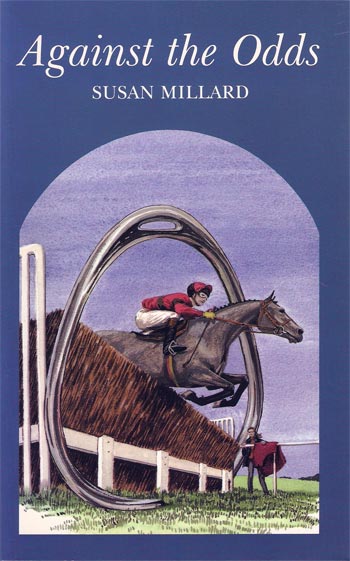
cover of Against the Odds
I'm preparing to work with an editor on a poetry pamphlet, "Ash Tree" which Prole Books have accepted for publication later this year. I'd known Brett and Phil for some time via the Great Writing Web site which Phil and I moderate. They have published several of what I've called "The Naomi poems" about the terminal illness of my grand-daughter who died in 2010. I was reluctant to offer them the whole sequence for fear of seeming to presume on their friendship. However, they have been very enthusiastic and I'm looking forward to working with Brett to polish the collection.

Having re-released "Against the Odds" this year as a digital edition, I'm working on a sequel. Twenty years on, my characters have developed and changed. Then they were working in racing, and expecting to move from racing and training into breeding racehorses. That hasn't gone to plan, and they've had to move north into a less affluent agricultural area of Cumbria. With their children now in their late teens and becoming ambitious themselves, there is plenty of scope for explosions!

Q. How do you spend your leisure time?


When I'm not writing or designing web sites, I carriage-drive one or other of my two Fell ponies, Ruby and Mr T.

 I also enjoy playing the harp - not a gilded concert monster, I hasten to add! When I was a teenager I used to sing in a folk band, and this is a folk harp with 34 strings. It stands about 3 foot 6 (1 metre) tall and makes a most lovely sound.

Q. Do you write for a local audience or a global audience?


*whispers* I write for me. I write the books I would like to read, and just hope that other people also enjoy them.

Q. Can you provide links to your work?


Of course! All the following pages have links to purchase and/or read a sample on Amazon.

COACHMAN

The Forthright Saga

Dragon Bait

Against the Odds

One Fell Swoop

Hoofprints in Eden


Other authors who are taking part in this blog hop


Geoff Smith

Helen Riebold

Linda Gruchy


Wednesday, December 12, 2012

COACHMAN - a spare chapter

Not all the scenes I wrote for COACHMAN made it into the final form of the novel. Here is an extract that might have been part of the final chapter:


The day they travelled north it was a sharp, bright morning, a day on which George was impatient to drive and irritable at the thought of sitting on a train with nothing to do. To make things worse, Lucy had remembered the smoked and sooted confinement of second class railway travel, and insisted he wore his oldest coat. Its shabby appearance laid another smudge across his mood.

A four-wheeled cab waited in the street with their belongings packed on the roof, the damaged writing case among them, strapped up with an old belt. However, George would not trust his whip up there, and carried it as always with the long lash looped and tied.

Mrs Bowe had wrapped herself in a shawl to lead the farewells. Tom Thetford stood by with a stolid face, and observed the fussing as though determined that no-one should have hysterics while he was about, while Mrs Bowe made sure that Betsy had securely wrapped her few possessions for the journey. Betsy herself was bundled inside a secondhand coat so large it appeared to be wearing her.

‘Now you girls,’ said Mrs Bowe, not really making any distinction between Lucy and Betsy, ‘look after yourselves, and make sure this coachman fellow does the same. I know what these driving men can be like. Betsy – you imp – behave yourself when you get to your new home – it’s a crying shame you leaving me to instruct a new girl from scratch – but it’s your good heart, I know – and I had rather see you go and look after Mrs Davenport than get yourself into trouble with young Robbie.’

‘I never went with ’im,’ muttered Betsy. She pretended to be engrossed in stepping on and off the doorstep.

‘I should think not,’ said Mrs Bowe. ‘I told you, you’re not allowed to have followers. You’re much too young.’

‘E’s walkin’ out with Lizzie Pearson now, anyway.’

‘Stop fidgeting,’ said Lucy.

George, with a wink at her, nudged Betsy’s shoulder. ‘There’ll be a score of sturdy lads come knocking at the door when we get to Kendal.’

‘Only if you introduce them to me first,’ said Lucy firmly, ‘and I arrange what evenings they’re allowed to call.’

‘There now,’ said Mrs Bowe, ‘that’s very fair, that is.’

‘But we shan’t let you hobnob with any old riffraff,’ added George. ‘They’ll have to present calling cards.’

‘Don’t be so foolish, Mr Davenport!’

‘Well, how else are we going to keep track of ’em all?’

Betsy giggled, and Mrs Bowe said, ‘Don’t give her ideas. Oh, dear, Lucy – I shall miss you! Go well and safely, my dear. Breathe deep of that north country air. I’m sure you’re going to have a beautiful healthy baby.’

‘I’ll write to you,’ promised Lucy, and hugged her, and all three women clung to one another.

‘Damned if I’d like to be seen carrying-on in the street,’ said Thetford, and turned to discuss the cab horse with George. ‘There’s been some quality there, y’know.’

‘Showing his age in the hind fetlocks, though.’

‘Ah!’ agreed Tom. ‘Well... I daresay it’s a good thing you’re leaving.’ 

George glanced at him, surprised by his quizzical tone. ‘I have to follow the work, if that’s what you mean.’

‘No. Not entirely. Seems to me there’s a young woman we both know, as gave a fair show of jealousy when she worked at the Swan. I recall as ’ow she come out special-like to travel with you on the Albion.’

George reddened, in spite of himself.  ‘She did.’

‘Kind of flattering, but I ’ope you didn’t do nothing about it.’ The wise old eyes gave nothing away.

‘I warned her off, Tom.’

‘I ’ope you did, for Mrs Davenport’s sake.’

George realized that Tom guessed what had happened, but the old man was a realist. Making a fuss over the truth would benefit no-one. As along as nobody asked him directly, he knew Tom would keep his suspicions to himself.

‘Mrs Davenport knows,’ he said, ‘And as for the young lady – she’ll get over it.’

The cabman, his gaze fixed on the horse’s ears, stolidly observed, ‘If yer party’s wishful to be at Euston for the ten o’clock train, better get in now.’

Tom took the hint, and shook George by the hand. ‘That proprietor in Kendal will be lucky to get you. I wish you all the best, I do, heartily, and Mrs Davenport and the baby too.’

George returned his handshake, liking the old man better than ever. The two of them stood irresolute for a moment before he said, ‘Well, I’d better disentangle these women, or we’ll be here the rest of the morning.’

Mrs Bowe startled him with a hug and a hard kiss on the ear, and when he escaped to help Lucy into the shabby interior of the cab, she showered advice on Betsy.

‘Remember to make yourself useful, gel! Get up early and don’t be to call – you riddle the fires and sift the ashes... make life easy for Mrs Davenport...’

George settled Lucy in a forward facing seat, and put Betsy opposite, where she sat excitedly waving farewell to Mrs Bowe and Thetford, even before the driver called to his horse and they set off. Lucy held her head high and felt for George’s hand, all the while staring rigidly out towards the great dome of St Paul’s. He knew she was struggling not to cry, and gave her tense fist a reassuring little shake.

He wasn’t sad to be leaving London. It wouldn’t be long before Sherman and Nelson and other less canny proprietors realized, as Chaplin had done, that the railway was an implacable competitor, and then they would sell out too, and the coach routes would die, and as they died he would have to seek work in more and more remote areas, and compete with more and more drivers out of place. He’d come here with an ambition to make his name, and instead he’d found that the best part of his driving career was over.

Lucy’s hand in his was a trust he mustn’t betray again. He wasn’t an irresponsible youth any longer, who could move on at a whistle and travel light.

They passed the Queen’s Hotel for the last time, and the Post Office, and somewhere in the clustered buildings behind it, the Swan. He watched as the cab bore him away, until it turned the corner into Newgate Street, and he couldn’t see even the buildings any more.


~~~~~~~~~~~~~~~~~~~~~~~~~~~~~~~~~
The complete book is available here: (Amazon USA) http://www.amazon.com/Coachman-ebook/dp/B009DORFOI/ref=sr_1_1?s=digital-text&ie=UTF8&qid=1348161105&sr=1-1
or (Amazon UK) http://www.amazon.co.uk/Coachman-ebook/dp/B009DORFOI/ref=sr_1_1?s=digital-text&ie=UTF8&qid=1348161105&sr=1-1

Wednesday, October 3, 2012

Video links about English coaching and driving (Bluffers' guide part 3)

http://www.youtube.com/watch?v=IaJtV2KGt_Q
The Bowman and Sutherland families - preview of the TV programmes recently on Sky. The Sutherlands do chuck-wagon racing, the Bowmans do Horse Driving Trials and Coaching; they had a go at each other's sports. The English section starts at 6 mins 11 seconds. This is a late 19th C stage coach (not a Mail) with hand-lever brakes operated both by driver and guard. Notice the horses are in full neck collars, unlike the breast collars that are popular for modern competitions.

If you're quick you can spot me and my daughter at 8:39 and 9:04 (we were in costume, though I admit NOT with any degree of accuracy) on the coach at Naworth Castle. We were aboard during the gallop up the hill to Naworth (black and grey lead-horses).


http://www.youtube.com/watch?feature=endscreen&NR=1&v=Zd3QWAfxZT4
and http://www.youtube.com/watch?v=RlEIEhAjGrc&feature=channel&list=UL - One of my mare's early driving show classes. Notice that my carriage is well balanced and well built so it makes very little noise over the grass, and you can hear Ruby breathing in rhythm to her movement. Other people's carriages are much more noisy.

http://www.youtube.com/watch?v=V9UoLR0g3FA&feature=relmfu - a little schooling at home with my late grand-daughter Naomi.

http://www.youtube.com/watch?v=6WoEtzCgJdo - this is a curricle, albeit shown in Spain, not in England. To be totally correct as a privately driven vehicle it should have straps from the horses' collars, not chains, to the head of the pole out front. Notice how the weight of the groom behind is needed to make the turnout balance over the axle. You can't drive one without a groom back there.

And for stylish pure English driving and rein handling: http://www.youtube.com/watch?v=BgZnOB_1G5Q The carriage parade for Trooping the Colour 2012.

http://www.jackdawebooks.co.uk/coachman.htm


Tuesday, October 2, 2012

The Bluffers' Guide to Horses and Carriages (part 2)

Coaches
Tudor
In the TV series "The Tudors" 19th century carriages were shown conveying certain grand personages about on behalf of Henry VIII. WRONG. This was the point at which I began to shout at the screen. Coaches were not in use even by Royalty until his daughter Elizabeth I's reign, and they were uncomfortable, jolting unsprung things suspended on leather braces. Elizabeth complained of being badly bruised from being thrown about in a coach that had been driven too fast, and she was a fairly hardy lady. There was no glass in the windows at this time (guess why) and wheels were shod with iron rims.

17th Century
Lots of authors forget that in a city, it was often convenient to travel in a sedan chair. Of course it didn't allow of company unless on foot, on horseback or in another sedan chair, but it had a lot of advantages over a horsedrawn carriage in the city. It was narrow and manoeuvrable so it could take you to places many carriages could not go, and the motive power understood speech! Also, in London and other cities based on a major river, watermen provided a taxi service up, down or across the water. John Taylor the "Water Poet" complained in "The World Runs On Wheels" that hackney carriages were taking away the ferrymen's business.

Steel springs made an appearance in the 1660s, and Sam Pepys remarked on them on a coach in London. He bought himself a private 4 seater carriage and two black horses, and probably employed a man to drive; and he seems to have been happy with his purchase, despite having to pay £2 to replace the glass in a window.

Commercial coaches were starting to appear on the roads. These were "stage" coaches which changed horses at inns along the road. One "stage" of its journey would be anything from 8 to 15 miles depending on the nature of the terrain. In winter, warmth for the passengers' feet was provided by filling the floor with straw - it works, but could be infested with livestock ranging from woodlice to fleas and even mice, depending on the diligence of the stable staff in providing clean straw.

18th Century
By 1688, stage coaches ran from London to 88 different towns and by 1705 this increased to 180. However, Mail coaches were not seen until after the Post Office adopted John Palmer's suggestion to convey letters by coach instead of on horseback, following a successful experimental run from Bristol to London in 1784.

Smart light two wheeled vehicles for private use, such as gigs and dog carts, became popular from the 1800s onward. Four wheelers such as the various forms of phaeton were common. But for independence and access to open country, to make your own way to a destination, you rode - and were liked all the better for your active character, as opposed to being carried lazily about by carriage.

As for the curricle, that vehicle so beloved of the romance author, like a tandem of horses driven to a gig it was racy and showy and difficult and inherently unsafe... so beware which of your gentlemen you put at the reins. It was an owner-driven carriage. (I mean, you don't buy a Ferrari and let a chauffeur drive.) And don't forget that with a pair or team your whip, no matter how skilful, needs a groom behind him. Why? Common sense and safety... and the blasted curricle wouldn't balance without him.

Manpower and brakes
A gentleman driving his own carriage and four would have had one man, and more likely two, to see to tangles or mishaps with the horses. In Regency Buck, the hero tells off the heroine for driving his team with no groom to help her, because her passenger has an injured arm. Georgette Heyer knew her stuff.

Not even an exceptional "whip" - male or female - would ever have driven without a servant, because early coaches and carriages had no brakes. Down gentle inclines the horses could hold the carriage back with the harness, but on steeper ones the footman or guard got down and fitted an iron drag shoe under the gutter-side hind wheel. At the bottom of the hill, he got down again, the whip backed the team so the carriage wheel rolled off the shoe, and the guard picked it up by its chain and hung it on the hook again - not touching it, because it was hot from the friction! The guard or groom had to deal with broken harness, kicking horses and so on... or just to hold the horses when the driver and passengers got down at their destination.

19th Century
Hand or foot operated brakes were late Victorian inventions which eased the work because the coach did not have to stop. They could still only slow the coach downhill; when loaded it weighed between 3 and 4 tons and the wooden brake shoes only operated on a 6 inch by 2 inch area of each wheel rim, so brakes couldn't stop it completely. Equally, rubber tyres for wheels were not invented till the 19th century, and they were solid, not pneumatic. Vehicles with rubber tyres tended not to have brake-blocks because they pulled the rubber off the wheels.

The idea of a "parking" brake didn't arrive until the advent of the internal combustion engine... a carriage you could turn off when you stopped. There are contemporary stories of coach teams being left unattended at inns, and taking fright or assuming a noise behind meant they were to start, galloping off with the coach with no driver at the reins... Horses require manpower, time and knowledge. Therefore - pretty please, authors - your characters driving a carriage can NOT abandon it at the roadside like a car, unless you want to plot a horrendous accident. You always need someone to take charge of the horses.

Terminology
If you've got to describe a carriage drive or even a ride, it probably pays not to be too clever. Even simple things are very easily got wrong! For instance, you all know reins are for steering, and probably that traces come back from the horses' neck-collars to pull the carriage... the difference between the two purposes may seem obvious, but I've seen a mainstream published novel confuse the two.

Coachmen and good drivers held the reins in their left hand in an understated, workmanlike English coaching style and steered by turning the wrist, or by helping with their right hand which also carried the whip. They wouldn't drive with a rein (or two reins) in each hand; not unless you want to set them up to be ridiculed by their fellow drivers. For sheer style, watch any video of a British Royal parade with coachman driven carriages... the 2011 Royal wedding, or Trooping the Colour.

There is a big difference between sporty owner-driven carriages like phaetons (yes, and gigs and curricles), and sober coachman-driven carriages like barouches. It's very easy to get lost in their subtleties. For instance: pole chains. They were used to steer and stop commercial coaches, carriages and coachman driven vehicles, while pole straps denoted owner driven private vehicles... Probably best not to go into it too deeply unless you are prepared to read specialist books. Even the sainted Ms Heyer occasionally got things wrong.

Phew - I'd better leave waggons and farm carts and commercial trade carts for another day.

Sex
There, that got your attention, didn't it? I saved the best bits for the end.

Don't forget we have three genders in horses who are used as transport. There's the intact adult male, the stallion; the female, the mare; and the gelding, who is an equine eunuch and was probably "attended to" fairly brutally at the age of 18 months or so. Most working horses were geldings, whose lack of sexual interest made them easy to manage even for inexperienced staff.

Mares are the natural leaders in a herd situation - so they can be bossy. If they aren't in foal they come into "season" every three weeks from early spring to late summer, which means they may be distracted as well. Stallions have a sex-drive that rises and falls with time of year - up in early spring and throughout the summer, down again as autumn comes. To deal with either stallions or mares successfully takes tact and good horsemanship. So please don't have your heroine ride a stallion, unless you can also write about how she manages him in the company of strange mares, who will flirt by peeing at him if they're in season and try to kick his teeth in if they aren't. (Don't you love how horses can be upfront and obvious? My two favourite Fell ponies have been mares.)

In Black Beauty Anna Sewell tactfully fails to mention such matters, so generations of readers may well have assumed that Beauty's lack of sexual commentary simply meant that he had excellent manners, and that he was capable of retiring to stud and begetting. This is, sadly, very unlikely.

One final note
A horse in war, in a carriage, hunting or doing any other kind of work will NOT neigh or whinny when in a stressful situation - eg, battle or accident. You may hear a snort of fright, or a grunt of pain or effort, then the sound of hooves galloping rapidly away. Unlike movie heroines, horses do not scream.

Sunday, September 30, 2012

The Bluffers' Guide to Horses & Carriages (part 1)

I've joined several forums for historical novelists recently while I've been completing COACHMAN. Reading some of their book previews on Amazon it has dawned on me that while historical novelists seem interested in being authentic about costume and weaponry, I've only found two who have any direct knowledge about horses, and one who understands carriages.

Given that until the start of Victoria's reign (or William IV if you are a Liverpudlian) the fastest means of transport anywhere was either a well bred horse or a well-horsed carriage, this seems rather strange. It's a bit like writing about modern London and not knowing that you can get your character across the city far more easily by Tube than by Ferrari.

Allow me to make some helpful information available!

Horses
Even for late medieval knights, war-horses were not huge beasts. (The modern Shire horse of 17 hands or more was developed for agricultural use, well after gunpowder put an end to the mounted armoured knight.) Ann Hyland proposes that the 15th C knight's "destrier" was likely to have been a sturdy cob type of about 15-2 hands. This type of horse was a "square gaited" animal who walked, trotted, cantered or galloped.

Horses for general riding were probably not taller than 15 hands, often smaller, and frequently they were "lateral gaited" or "soft gaited", which means they walked and cantered but their in-between gait was a pace, rack or amble, rather than a trot. All these were more comfortable than a trot; the pace is similar to that of a fast moving camel or giraffe, with the legs on each side moving at the same time (watch videos of harness-racing pacers). The amble was a rapid, level, shuffling movement. Over good going the rack, like the pace, could be quite fast. Horses that moved in this comfortable way were amblers or palfreys, popular mounts for both ladies and gentlemen.

Horses for racing or hunting were "coursers", ie running horses, who moved "square" like the knight's destrier; they trotted when not galloping, and even the racehorses were not large. Many early thoroughbreds were under 14 hands high.

A useful type from Shakespeare's time onward was the Galloway, originally a type from south-west Scotland. Later the term became a generic one (like Hoover for vacuum cleaner) for any sturdy, sensible small cob of 13 to 14-2 hands. They probably looked much like a Highland, Dales or Fell pony, though for practical reasons they probably didn't carry anywhere near as much hair on neck, tail or fetlocks ("foot locks") as their modern counterparts do.

Women travelling would have a choice of riding pillion behind husband or brother; rich ladies could ride side-saddle; or ride in a litter, which was a covered seat carried on 2 long poles, suspended either side of a horse before and behind.

Distances
Modern endurance horses ridden intelligently at suitable paces for the terrain can cover anything from 25 to 50 or even 100 miles in a day. This isn't just the racy Arabian types; I know a Fell pony that has completed a 100 miler in less than 18 hours. Bear in mind that the riders don't flog on at full gallop, which being anaerobic activity would rapidly exhaust the horses' energy; they go at the pace that suits the country they have to cover, and much of that is aerobic, steady trotting or cantering, with intervals of walk to allow the horse to have a breather.

Military dispatch riders galloped, of course, and covered short distances of 3 or 4 miles in a quarter of an hour (12 to 16 MPH); but ridden horses for civilian travellers over longer distances would average no more than 6 MPH, so a day's journey was probably no more than sixty miles and often much less if roads were bad. Working horses in a city were often forced to walk because of other traffic, and there were few highway regulations to ease their passage.

Unlike cars, horses do need recuperation time before they can reasonably be expected to make another journey. This involves them being groomed, fed with grain and hay, and given water to drink and a stall under shelter in which they can stand quietly and perhaps sleep - though horses can sleep standing up and tend only to lie down for short periods.

Part 2 will look at travelling by carriage and coach.


Tuesday, September 18, 2012

A Historical Novel - laid bare (Part 1)

No novel has ever taken me so long to write as Coachman, which has gone onto Kindle in the past few days and will be in print shortly. Here is a taster of the background, which is included in full at the back of the novel in both formats.

~~~~~~~~~~~~~~~~~~~~~~~~~~~~~~~~~~~~~~~~~~

In the 1990s I had the idea that I would chronicle the life of William James Chaplin, who was a huge force in the London coaching business in the 1820s and 30s.

The Dictionary of National Biography says of him:

Chaplin, William James (1787–1859), transport entrepreneur, was born on 3rd December 1787 at Rochester, Kent, the son of William Chaplin, a coach proprietor on the Dover road, and his wife, Eleanor. Chaplin was educated at Bromley, and on 11 July 1816 married Elizabeth Alston at St Nicholas, Rochester. They had sixteen children.

About 1823 Chaplin succeeded William Waterhouse at the Swan with Two Necks inn, Lad Lane, London, and he was to become the largest ever coach proprietor. In 1827 his coach business employed 300 to 400 horses; by 1835 this had risen to 1200. As well as three London inns, he had extensive stables at Purley, Hounslow, and Whetstone, and was said to employ 2000 people. In 1836 he had ninety-two coaches leaving London every day, serving all the main roads from the city. He horsed fourteen of the twenty-seven mail coaches leaving London each night. His annual turnover was said to be £500,000.


Chaplin’s vision was so clear that when the railways came to change long-distance travel he was able instantly to step back and rebuild his business in relation to the new technology. He liquidated all his coaching assets, though he kept the inns, and he went away for six weeks to Switzerland to do his planning. Once his carrier partnership with Benjamin Worthy Horne was established, he invested heavily in railways.

The few stories about Chaplin that are recorded in books by his contemporaries all show him in an affectionate light. He was largely responsible for the abolition of heavy brutal driving whips in London’s coaching trade, and despite his nickname “Bite-Em-Sly,” everybody he employed seemed to like him. He was elected MP for Salisbury, and at his death his business was worth around £300,000. A thoroughly solid, sound, clever fellow.

When I realised how damn boring that story would be – Dallas with only the nice bits on display – I knew I had to invent someone whose life would touch his, so I could show what might have happened to the drivers, stablemen and horses when railways took the heart out of coaching.

My own great-grandfather was a coachman. He was in domestic service, not on a commercial route, and he lived 50 years after Chaplin’s time, but his existence in my family tree gave me a name to hang my story on: George Davenport. And my great-grandmother really was called Lucy Hennessy, though she didn’t live in Carlisle and my relatives will no doubt be relieved to hear that I have completely invented her unpleasant mother and their unsavoury history.