Friday, April 19, 2013

Contemporary Novelists' 4 day Book Fair

"This is a Book Fair for authors and readers who love contemporary romances, chick-lit, romantic suspense novels, family sagas or lovely tales of village/town life with a touch of romance."


Sue Millard Fails to Interview Nora Forthright


Now then, writer person. It's a middlin' sort of day. Are ye well?

Ah'm a bit flustered-like, thinkin' ye might expect me t'be wearin' spike heels like them in't photograph. Well, ye'll never catch a sheep in a dippin' pen if yer teeterin' about on stilts like them. Ruin yer feet too. Be warned, Ah'm built for comfort an' so are me shoes.

Well, Ah dun't know whether yon book of thine would count as "lovely village life" but Ah've got family all reet and since ye've writ about 'em people can read about 'em if ye like. Now Ah've got taties to scrub, so if ye'll excuse me....


Nothing ever happens in an English country town ... does it? Nora Forthright and her grandson Wayne stumble through the fictional Cumbrian towns of Dangleby and Pullet St Mary, putting things right entirely by accident.
GENRE: Comedy / cosy crime.
Paperback ISBN: 978-0-9573612-3-2
£6.99
Kindle ASIN: B0099RQNLU :: ISBN: 978-0-9573612-2-5
£2.56

Jackdaw E Books Ltd

 Extract  from "The Forthright Saga"

A dark-haired fat boy and a thin ginger one crouched in the bottom of a beech hedge beside the garden wall of The Grange. It made a good base camp for war games outside in the lane, and for pirate raids into the garden itself.
“C’mon, Wayne,” wheedled the fat boy. “That Mrs Station leaves the kitchen door open. When she goes out to nag the gardener, we could nip in, easy.”
“Aw, Zak! She’d come in an’ catch us.”
“No she wouldn’t,” Zak said scornfully. “She’s one of them twig women. She’d scream and run for help.”
“Yeah, and she’d fetch him, that gardener.”
Last summer, Captain Zak had urged various Pirate Crews over that wall in raids for raspberries, peas and ripening apples. The Crews had all been young, skinny and quick, and Ernie, who had been the gardener there for many years, was none of those things. Unfortunately when Ernie retired the situation changed. The new gardener was also skinny and quick and he worked far more hours than Zak thought was fair. The garden was dug and manured, the plants sprouted in pots and under cloches, the fruit trees were neatly pruned and the raspberry canes had been cleared of everything but their last summer’s growth. Zak hugged his denimed knees among the slender buds of the hedge, and resigned himself to the fact that it wasn’t yet worth sending his new Crew plundering.
His previous Pirate Crews had long since mutinied to play elsewhere, and the choice of accomplices was becoming limited. He’d picked Wayne mainly because he was a new boy to the school. Being ginger-haired Wayne was easy to ridicule, and he was skinny and quick all right, but he wasn’t anywhere near as biddable as he should have been.
“Dun’t be such a mardy-arse,” said Zak. “It wouldn’t hurt to have a look indoors. They’re rich, ain’t they? Look at that fancy lamp thing they put up. Dad says it must’ve cost a fortune.” The copper and etched-glass lantern over the front door had been a talking point for a week. “There might be summat. Big cars, locked gates, stands to reason they’ll have things we can nick.”
Wayne wriggled. His Dad was Nora Forthright’s son, Dangleby born and bred, so in the back of his mind, he could hear the tones that his Grannie Nora would use if she found out he’d been stealing. Not the words; he could never predict what she would actually say. While it seemed scrumping had been all right in her own childhood, she’d tut-tutted and frowned theatrically behind those silly old-fashioned glasses when he tried to top her stories with Zak’s Pirate invasions at The Grange. As for stealing, real stealing from inside somebody’s house – oh no, he knew the shrill voice she’d use and his Dad’s hard hand that would follow, and he wasn’t keen on risking either of them.
“That gardener can run faster’n me, so he’d catch you no trouble. And there’s cameras.”
“Them things don’t work,” said Zak, ignoring the slur on his running speed. “Me dad says they’re just dummies. We could nip in after school. I bet they don’t turn ’em on until it goes dark anyway.”
Wayne frowned over this; something didn’t quite make sense.
“Grannie Nora thinks they’re real,” he said. “I’d rather play Spiderman.”
Spiderman was a simple game to see who could climb highest in the local trees. It was one of the few challenges where Wayne’s slighter frame was likely to overcome Zak’s bulk, so Zak ignored the suggestion.
“We should come at a weekend. We’d have plenty of time then.”
Wayne sighed and abandoned Spiderman. “I’m not missin’ footie practice on Sat’dy.”
“Sunday then,” said Zak, knowing that Wayne had never yet been chosen to play for the team.
“I got jobs to do for Grannie Nora on Sunday. And the gardener might be here.”
“He won’t be workin’ Sunday,” said Zak scornfully. “Just cos your Dad works Sundays, don’t mean wussy Alan does.”
“Well what about Mr Station? I bet he’s home at a weekend. I’m not gettin’ anywhere near him – not with a name like Slogger.”
“That’s only cos he plays cricket. You wouldn’t know him. You weren’t here last summer.”
“Wi’ that big black car, I bet he’s a drug dealer,” said Wayne, his voice rising in desperation. “That’s why he’s got all them cameras. I bet that gardener’s a drug dealer too.”
“Him? He’s not a drug dealer, he wouldn’t need to do gardening if he was. He’s that skinny I bet he sniffs coke. Bet Slogger Station pays him in coke an’ that’s why he’s always so wired.”
This worldly wisdom fascinated and confused Wayne so much that curiosity overcame his fears. “You don’t smell coke, dummy, you drink it. Or else it’s that black stuff Grannie Nora puts in the stove to burn.”
“You sniff it up your nose,” said Zak.
“You do not.”
“Do. Darren’s big sister Jade says.”
Wayne thought about it for a moment. “That’s weird. You’d drown.”
“It’s not a drink, dummy. It’s like a powder. Darren says it tastes funny. Jade told him she’d lock hers up if he tried it again.”
“Does it taste like Space Dust?”
“Yeah,” said Zak with certainty. “I suppose it fizzes more if you put it up your nose.” After a moment he said, “I got 50p, let’s ga down the Post Office and get some.” 


Visit other fascinating blogs by contemporary novelists at the Book Fair.


Sizing people up

Ponies are so funny. Today they had come charging in for their tea and were troughing through it in the stable when our cottage visitors came up from the Hen Field after walking their terrier. Both Mr T and Ruby instantly stopped chewing and turned eyes, ears and noses to the door to assess the visitors. After a moment of utter silence they decided at the same moment that the new humans were neither interesting nor dangerous, and the chewing at once re-started.

Talking of visitors, I am visiting Rebecca Giltrow's blog here:  do pop along and leave her a comment!

Tuesday, April 9, 2013

Historical Novelists' Book Fair 12-15 April 2013

 I'm a day or two early - but as I have a really busy weekend ahead I thought posting early would be excusable!  


COACHMAN and 1830s Religious observance

Giveaway 

I will give away a digital copy of COACHMAN to two randomly-selected people who enter, between the dates of 12 and 15 April (Draw to take place on the 16th). Please follow me on Twitter (@jackdawebooks), or like my Facebook page (sue.millard.9) or like my Jackdaw E Books page on Facebook, or if you have already done all those things then please follow this blog and leave a comment so I know who you are and that you are entering the giveaway competition.

I will contact you if you win and ask for your email so I can send the book. Please let me know whether you'd like MOBI format (Kindle), EPUB (Kobo/Sony) or a PDF.  All I ask in return is that when you've read the book you leave a comment on the Amazon UK web site (UK), or the Amazon USA site if that's your location.

Religious Observance in England in the 1830s 


Lucy's religious beliefs 

My heroine Lucy Hennessy has had a rough childhood and adolescence, and until she meets my hero George Davenport she has only one solace that keeps her sane: her religious belief. She is lucky that her mother was tackled by one of the ‘slum parsons’ – a street preacher in this case – who convinced her that Jesus could save them both from their sins.

We may think these days that the Victorian era was a heavily religious one, but in fact Thomas Carlyle wrote in 1838 that his age was one “destitute of faith and yet terrified at scepticism.” A census in 1851 recorded how many people actually attended Church service on Sunday 30 March, and found that roughly 30 out of every 100 people might have good reasons not to attend – for instance the sick, the very elderly and the very young and those who were compelled by the nature of their work to labour or serve on Sundays. Of the remainder, around 40 attended services and 30 did not. I was surprised. 40% may be higher than today’s turnout which has to compete with shopping and car-washing, but it was nowhere near as high a figure as I had expected for the mid-Victorian era.

Although religious convictions and beliefs would have coloured many early Victorian social activities, active Church attendance varied both with social class and geography. Absence was highest in large towns in industrial areas, while attendance was best in small rural communities. A similar pattern appeared in the breakdown between types of church, with rural and small-town communities attending mainly Anglican services and the manufacturing areas favouring Non-Conformist chapels. This social distinction was indicated by describing people as either ‘church’ (i.e. Anglican and middle class) or ‘chapel’ (i.e. Nonconformist and working class).

Ma Hennessy and Lucy ought to be ‘chapel’ by background, but the area of Carlisle in which they live is served by both the church of St Cuthbert and the Anglican cathedral, so Ma has the chance to attend a rather more upmarket place of worship than would be the norm for her class. It doesn’t work of course: at the end of George’s visit to the Cathedral with Lucy and her mother, we see how the middle-class Dixon family look on Ma Hennessy with disfavour. In this case, it isn't so much the social sneer of one class to another, but rather a reflection of Ma's previous history (and you’ll have to read the book to find out what that is!). For my purposes, Ma's ambition means that Lucy received a better education, at the Central School, than many girls of her upbringing, which enables her to write fairly long letters. These keep her in touch with George when he goes ahead to find work in London, and then let her to brag to her acquaintances in Carlisle after she joins him and they are married. And, of course, we peer over her shoulder while she does so...

Lucy Davenport's Journal. 

Kendal, Westmorland, 28 October 1838.


I have a small space of time in which to set some of down my private thoughts - empty time, the like of which I may not have again. Already I have duties in keeping the house and preparing for the birth of Our child. I hope and pray he will be a boy, brave and handsome like his father, but whatever God sends, I know our child will be loved.

When we lived in the Lanes, the street preacher came to show us the Light and he, too, fought to bring our souls to Jesus. That my mother was drawn by him out of her depravity - at least in part - is the greatest reason for my gratitude to God and to His Son. Her nature, alas, is so venal that her conversion was never more than skin deep. Where I would have been content with chapel she must find a church where she might copy fine manners and scrape acquaintance with people above our station. Still I bless that man for bringing us to the Truth of God. When I gave my heart to Jesus all the sins I had been forced to commit were washed away and His armour was put upon me, so that I never again could suffer.

I do not fear my coming labour. I have endured pain before, and cruelty, but I know from the witness of my own life that Jesus will support me. My love: If I should die and leave this world it will only be to wake in the next, in the safety of His arms. I pray for a happy outcome, but if it should turn out otherwise, I leave these thoughts for you, my dearest, and for our little one. I will be in Heaven, where I trust that you may come to me in time and we shall be reunited in the love of God.

I say "I trust" because I know, my dear, how strongly you have fought against any belief in our heavenly Father. I pray nightly that you will come to know Him in all his loving kindness, as I do.


George's scepticism

George is more sceptical about religious belief and observance than Lucy is. His mother, as the daughter of a hard-gambling squire, may well have hoped to raise him in her own family's tradition, as an Anglican. However, his father’s family of skilled horsekeepers belong to the “artisan” class with whom the Anglican clergy are generally unpopular because they cling to the declining political High Tory party. Although George is familiar with both middle and upper class men who address him almost as a social equal on account of his driving skills, he doesn't share their political or religious beliefs. He tends to endure Sunday with suppressed impatience, and when he and Lucy attend church to arrange their wedding he is critical of the local vicar being late for the appointment.

I worried initially that if I gave him free-thinking opinions about the Church and religious observance I might be accused of anachronism. My research, however, led me to Thomas Arnold (headmaster of Rugby School) who wrote in 1832 that “it does not do to talk to the operatives about our ‘pure and apostolic church’ and ‘our glorious constitution’; they have no respect for either…” At the moment George is apolitical but I think if I were to write more about him he might very well turn out to be a Chartist!

So it turns out that the scepticism that his character kept showing as I wrote was not unusual for the period. What a relief!

COACHMAN

Good-looking and ambitious George Davenport travels to London with his bride Lucy, determined to make the most of his skill in driving a four-in-hand of horses. It’s 1838. Queen Victoria is crowned, and England is at peace, but it isn't a good time to be a coachman.

Just as George finds employment with William Chaplin, the “Napoleon of coaching”, the first railways are about to open across the country. Their competition will kill off the road-coaching trade. George loves both his work and his wife, so he has a lot to come to terms with… even before the boss’s daughter starts to stalk him.

Excerpt

Carlisle, October 1837


Lucy first saw George strolling into the Blue Bell, seeming to bring with him all the sunshine of the crisp autumn afternoon. He stood his whip against the bar and doffed his smart hat to her most politely, and when he asked for ale his smile was so firm and handsome she had to stop herself hurrying, in her eagerness to serve him.

After he’d taken the edge off his thirst he didn’t wander off to find a seat like most coachmen did. He unfastened the buttons of his driving coat to take in the warmth of the inn, and leaned his elbow on the little counter.

Lucy seldom bothered to question her customers, but there was something steady and restful in his face, and something very appealing in his warm brown eyes.

“Have you come very far?” she asked.

“Oh, around,” he said. “Liverpool, Manchester, Buxton, all over.”

“Buxton? Oh aye? I’ve heard it’s popular to take the waters if you’re poorly. But it must have done you good. You look quite healthy.” She gave a hint of a smile, inviting him to laugh, and he did.

“I wasn’t taking a cure, saucy. I was driving a coach.”

“As if I couldn’t have guessed.” She flicked a finger against the whipthong that hung like a coiled white snake from its stick. “Was it good work?”

“Not bad. I drove the manufacturers, and the commercial gents, and their wives and families. It was nothing fancy.”

This time she laughed, not believing him. “Oh, I’m sure it must have been.”

“Well,” he said, “it was a business, just like yours, I suppose. If you can give your passengers something useful about the scenery or the places they should visit, they remember you and give you a good tip.”

“And you had plenty to tell them, I suppose?”

He only smiled a little. “They’re manufacturers – the new rich – people who want to move in society.  I don’t care so much for them because they don’t care how I drive – and that’s because they don’t know how it should be done! But if I had you on my coach, I’d find all manner of things to tell you.”

“Oh, I couldn’t move in society,” she said. “I’ve lived here too long! But if you have a new way to stop the customers fondling me, I’d be glad to hear of it.”

“Impossible,” he said, “unless you could put on a hundredweight of flesh and about forty years! And that would be a dreadful waste.”

She had no time to answer before Mr Farrimond shouted, “Wench! Fetch us brandy, will you?”

She excused herself and carried brandies to the fireside for Farrimond and his friend Armstrong. She considered her new customer. He seemed a bit cagey about his background but she couldn’t fault him for that: she knew what it was to need defences. Too many men had come and gone through the doors of the Blue Bell, and the other houses where she and her mother had lived.

When she came back he was looking into an empty mug.

“Shall I fill that up for you, sir?”

“George,” he said. “Davenport. But you can call me George,” and when she reached for the mug he wouldn’t release it until she’d repeated his name.


To download Coachman please go to my web site and follow a link to the format you prefer: Kindle (USA and UK) or E-Pub.

Some references 

Religion in Victorian England
http://www.crossref-it.info/articles/183/Religion-in-Victorian-England

Religious Observance in Early Victorian Times


Mannix, 1947: History, Gazetteer, and Directory of Cumberland


Historical Book Fair bloggers

1. Francine Howarth  19. Maggi  37. Elizabeth Hopkinson  
2. Fenella J Miller  20. Suzi Love  38. Michael Wills  
3. Paula Lofting  21. Jeanne Treat  39. DM Denton  
4. Helen Hollick  22. Chris Longmuir  40. Richard Abbott  
5. Martin Lake  23. Kiru Taye  41. Sue Millard  
6. Jane Godman  24. Betty Cloer Wallace  42. Margaret Skea  
7. J.G. Harlond  25. Christina Phillips  43. Wendy J. Dunn  
8. Melanie Robertson-King  26. Suzy Witten  44. Bryn Hammond  
9. Nicole Hurley-Moore  27. Kim Rendfeld  45. Sarah Waldock  
10. Anne Gallagher  28. Kevin John Grote  46. Hilda Reilly  
11. Deborah Swift  29. Ginger Myrick  47. Roy E Stolworthy  
12. Derek Birks  30. Linda Root  48. Patricia O'Sullivan  
13. Katherine Pym  31. Prue Batten  49. Glen Craney  
14. Michael Wills  32. Pauline Montagna  50. Suzan Tisdale  
15. Sandra Ramos O'Briant  33. Sophie Schiller  51. Jo Ann Butler  
16. Elizabeth Caulfield Felt  34. Judith Arnopp  52. Charles Degelman  
17. J L Oakley  35. Anna Belfrage  53. Gates of Eden  
18. Alison Stuart  36. Jean Fullerton  54. Elizabeth Keysian  


Saturday, March 30, 2013

The Napoleon of Coaching

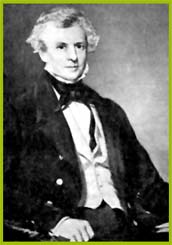
Chaplin, William James (1787–1859) was born on 3rd December 1787 at Rochester, Kent, the son of William Chaplin, a coach proprietor on the Dover road, and his wife Eleanor Mountain.

Chaplin was educated at Bromley, and on 11 July 1816 married Elizabeth Alston at St Nicholas, Rochester.

Whatever Chaplin did, he did thoroughly. He and Elizabeth had sixteen children:


Eleanor – 1817 – 1865
Sarah – 1819 – 1870        } twins
Marianne – 1819 – 1879    }
Rosa – 1821 – 1829
William Augustus – 1822 – 1896
Horace – 1824, died in infancy
Horace – 1826 – 1907
Alfred – 1827 – 1901
Isabel – 1828 – 1871
Caroline – 1829 – 1886
Ernest – 1831 – 1902
Edwin Charles – 1833 – 1860?
Rosa – 1834 - ?
Eustace de St Pierre – 1835 – 1879
Percy – 1837 – 1891
John Worthy – 1840 - 1920

Pollard's depiction of Mail Coaches leaving The Swan With Two Necks
In business too, Chaplin’s thoroughness carried him to the forefront. About 1823 he succeeded William Waterhouse at the Swan with Two Necks inn, Lad Lane, London, and by 1827 his coach business employed 300 to 400 horses, which by 1835 had risen to 1,200.

The inn was built on the classic plan of a central yard with galleried buildings around it – the kind of inn Shakespeare would have been familiar with as a venue for staging plays. Building space, however, was non-existent around the outside of the Swan so the stables for the horses were underground.


Chaplin owned other London inns: the Cross Keys, the Spread Eagle in Gracechurch Street and the White Horse in Fetter Lane.

He had extensive stables at Purley, Hounslow, and Whetstone, and was said to employ 2,000 people. In 1836 he had 92 coaches leaving London every day, serving all the main roads from the city, to all points of the compass. He horsed 14 of the 27 mail coaches leaving London each night, including Exeter, Wells, Poole, Port Patrick, Stroud, Liverpool, Falmouth, Pembroke, Holyhead and Devonport. His annual turnover was said to be £500,000.

According to Thomas Cross, one of his former coachmen: ‘Downright industry, and a systematic application to business, in which the female members of the family were called to assist, formed the foundation of his elevation’; he had excellent knowledge of both horses and men, and ‘an intellect superior to most of his class in shrewdness and tact, and this with a soft, oily expression, that procured for him the soubriquet of “Bite 'em sly”.’

The Edinburgh to London Royal Mail Coach
Harris, writing in 1885, stated that he had never heard any of Chaplin's former coachmen or guards speak ill of him.

According to the Dictionary of National Biography Chaplin lived “at a hotel he owned in the Adelphi”. The addresses recorded for the births of his children show the movements of the family. Eleanor, the eldest, had been born at Rochester, before they moved to London. The twins Sarah and Marianne were born at Gracechurch Street, as was Rosa, who died aged only 8; so was William Augustus who was to follow his father into innkeeping at the tender age of 17.  Presumably the Gracechurch Street address was either the Spread Eagle or a house very close by. By 1824 the family had moved to 1, John Street, Adelphi, much further “up West” where the next 8 children were born. 

Eustace in 1835 was the odd one out as he was born at the Kingston Hotel in Calais. Although October might seem a little late for the family to be en route to or from a holiday, Chaplin wrote to a fellow coaching contractor on 27 December 1835: “yr letter came on the Eve of my departure for a holiday, and I carried it to the Alps, thinking to catch an Evening to give you my sentiments on yr suggestions… I returned in Octr & thought yr letter as well unanswered till…Decr” Possibly Chaplin had also been distracted from his colleague's letter by the concerns of travelling with a newborn baby.

In 1837 Percy was born back at 1 John Street, Adelphi, and finally offspring number 16, John Worthy, was born at 1 Royal Terrace, Adelphi. I’m not sure whether this simply reflects a name-change for John Street or whether it shows a move to a new address in the same very small district. However, John’s middle name does reflect the friendship between Chaplin and his business partner Benjamin Worthy Horne, with whom he established the railway carrying firm of Chaplin and Horne.

There are a few anecdotes about Chaplin in his business life which have been recorded by coachmen and businessmen who worked with him. He wasn’t above driving his own horses, which apparently he did very well. One day George Denman, toll collector at Kensington Gate, issued Chaplin a toll ticket bearing the improper amount for his coach. During the ensuing argument Denman took hold of the horses and Chaplin used his whip to make Denman let go. He was summonsed and later fined 12s and court costs.

Chaplin in his turn censured a well known coachman for driving a team out of the Swan with Two Necks in ring-snaffles instead of the more severe curb bits, and told him if he did it again he would lose his position. He was sharper still with a man whom he suspected of stealing oats overnight: he lay in wait inside the corn-bin and when the man lifted the lid Chaplin jumped out, pitched into him and sacked him there and then.

However, like most coach proprietors he turned a blind eye to the practice of “shouldering” – driver and guard taking fares from customers on the coach without entering them on the official waybill. When he presided over coaching dinners for his drivers it was considered a good joke that he proposed “Shouldering” as a toast.

Because he ran large businesses in London, Chaplin’s name crops up occasionally in Old Bailey records of the period. On 12 April 1824  Edward Archer was indicted for stealing “seven 5l. Bank notes, and five hundred 1l. Bank notes , the property of William Chaplin and others, his partners.” A case that was heard in May 1838 gave me the name of Mr Ibbotson, the head book-keeper at the Swan with Two Necks, during the conviction for fraud of Sharpe, a booking clerk. I made use of Sharpe’s departure to switch Sarah into my story in his place. 

Chaplin was known to grumble about the actual profits he made, stating in 1827 that, “I have not a shadow of a doubt that, were the coaching account of the nation kept regularly, the whole is decidedly a loss and the public have the turn.”

Another coaching proprietor, Thomas Cross (Autobiography of a Stage-coachman) – like many others – failed in business due to the railway boom. He petitioned the House of Commons for help in 1845: “in passing any Bills having reference to railroads, in some or one of them such provision shall be made as shall prevent your petitioner and his family from coming to the extreme of misery.”  Chaplin, however, had already clearly anticipated the effect of the railways on his business, and in 1838 he had pre-empted the difficulty with characteristic thoroughness. He sold most of his coaches and horses. He left the proceeds of the coaching sales on deposit, and went off to Switzerland for six weeks, according to the National Dictionary of Biography, to “contemplate his future.”

Since Chaplin was probably still in England in May 1838 when the last Mail Coach Procession took place – at any rate he hadn’t sold out his interests in the Mail Coaches at that point – I suppose that he must have gone to the Alps later in the year. The Post Office had by then transferred a large amount of its Mail business from the coaches onto the new railways.

I wondered when I was writing COACHMAN whether Chaplin took all his huge family abroad with him at that time. For instance, he had retained his inns; it seemed reasonable to speculate that for the sake of giving his elder children experience in business he might leave them in charge there. William, for instance, was certainly named as the landlord of the Swan with Two Necks the following year, when he was only 17. The National Dictionary of Biography says that Chaplin “ensured that no business communications could reach him” while he was abroad in 1838. I exploited this interesting break in his family pattern as an opportunity for his daughter Sarah to pursue my hero George!

On his return Chaplin invested a large sum in the London and Southampton Railway (later the London and South Western Railway, or LSWR). By 1840 he was its vice-chairman and in 1843–52 and 1854–8 he was chairman and guided the company through its formative years.

In 1840 Chaplin and Horne became agents to the Grand Junction Railway, and from 1847 the company shared an exclusive goods and parcels agency with Pickfords on the London and North Western Railway (LNWR). Chaplin retained a share in this until his death on 24 April 1859.

He was buried at Strood, Kent.
~~~~~~~~~~~~~~~~~~~~~~~~~~~~~~~~~~~~

Victorian Historical Novel - COACHMAN - http://www.jackdawebooks.co.uk/coachman.htm

"K M Peyton meets Malcolm MacDonald."

Good-looking and ambitious George Davenport travels to London with his bride Lucy, determined to make the most of his skill in driving a four-in-hand of horses. It’s 1838. Queen Victoria is crowned, and England is at peace, but it isn't a good time to be a coachman.

As George finds employment with William Chaplin, the “Napoleon of coaching”, the first railways are about to open across the country. Their competition will kill off the road-coaching trade. George loves both his work and his wife, so he has a lot to come to terms with… even before the boss’s daughter starts to stalk him.

~~~~~~~~~~~~~~~~~~~~~~~~~~~~~~~~~~~~~

Sources 
Dorian Gerhold, ‘Chaplin, William James (1787–1859)’, Oxford Dictionary of National Biography, Oxford University Press, 2004 [http://www.oxforddnb.com/view/article/47556, accessed 19 April 2007]
S. Harris, The coaching age (1885)
T. Cross, The autobiography of a stage-coachman, 3 vols. (1861)
C. G. Harper, Stage-coach and mail in days of yore, 2 (1903)

The Proceedings of the Old Bailey, 1674-1913 [http://www.oldbaileyonline.org/ accessed 30 March 2013]

Wednesday, March 27, 2013

A Very British Blog Tour.

A Very British Blog Tour


Authors, Nancy Jardine, Mark Patton and Ailsa Abraham have invited a group of British authors to take part in ‘A Very British Blog Tour.’ 

Q. Where were you born and where do you live at the moment?


I was born in Cheshire, in the village of Bebington on the Wirral Peninsula which sits on the map like a tilted rectangle between Liverpool's River Mersey and Chester's River Dee.

Wirral is historically a marginal area, with placenames partly Anglo-Saxon and partly Viking. Wallasey, the northern corner, was quite separate and its name means "the Island of the Strangers" so I assume the earlier blokes and their families holed up there when the invasions happened - and that it's nothing to do with my Nanna living there!

People think of Wirral as a dormitory for Liverpool and Chester but it has a distinct character that in some ways is more related to the northern corner of Wales, where the local accent, for instance, is noticeably not Welsh but a mix of Scouse and Cheshire. For a while we were postcoded through Liverpool but it has now reverted to Chester.

There is an enormous list of famous people who were born or lived on Wirral in their formative years: it includes Daniel Craig (yes, Mr Bond), presenter Fiona Bruce, sportsmen Matt Dawson, Austin Healey, Chris Boardman and Ian Botham, poet Wilfred Owen, cartoonists Bill Tidy and Norman Thelwell, actors Eric Idle, Glenda Jackson, Jan Ravens and Pat Routledge; not forgetting Emma Hamilton, the mistress of Admiral Horatio Nelson; and Georg Frideric Handel who sailed from Parkgate en route to Dublin for the premiere of his oratorio Messiah.

That list is by no means comprehensive - so I have a lot to live up to.

Q. Have you always lived and worked in Britain or are you based elsewhere at the moment?


I've always lived in England. However, I was startled to find that I'm rather a mongrel! One of my forebears was a Lancastrian ironfounder, one a Liverpool shipowner, one probably of Irish descent who came from London to make candles at Price's Bromborough Pool Works, and still another was a German diplomat with a French wife, whose son (my great-grandfather) was by turns a coaling merchant in the Canary Islands, a newspaper editor, a foreign correspondent, and a Liverpool detective (a policeman, not a defective!)

Q. Which is your favourite part of Britain?


Where I live now, between the Lake District and the Yorkshire Dales, though I'm very fond of Chester. I love the sudden appearance of the Howgill Fells when I'm coming home on the M6. They are strange hills, quite different from the cragginess of the Lake District or the limestone sweeps of the Dales. Alfred Wainwright called them "sleeping elephants" though for most of the winter their rounded, wind-scoured grasslands are lion-tawny in colour rather than the grey that A.W's phrase conjures up.

Q. Have you ‘highlighted’ or ‘showcased’ any particular part of Britain in your books? For example, a town or city; a county, a monument or some well-known place or event?


I set "Against the Odds" on the Wirral and in Chester, with a major scene taking place on the City Walls and at the Roman soldiers' shrine of Minerva on the other side of the River Dee at Handbridge.

The first third of "COACHMAN" is set in Carlisle, around the Cathedral, the Crown and Mitre coaching inn, the Post Office, McReady's Theatre and the Blue Bell. Of course the area has been re-built more than once since then. Of the theatre, only the facade survives, and although the Crown and Mitre is still thriving it doesn't look at all like the original.

The event that I showcased in the later part of the book was the opening of the London-based railways in 1838, which resulted in the now forgotten collapse of the horsedrawn coaching trade.

"The Forthright Saga" is more loosely set in "a" Cumbrian market town, but I refer to it as Dangleby and I'm not going to divulge which town it's based on!

Both "COACHMAN" and "The Forthright Saga" have been entered for the Lakeland Book of the Year Awards on the basis of their locations.

Q. There is an illusion - or myth if you wish - about British people that I would like you to discuss. Many see the ‘Brits’ as ‘stiff upper lip’. Is that correct?


I don't think it is. I am moved to tears by weddings as well as funerals, and very often by music, yet I know some people who are not touched at all by any of these things. People are people, with different upbringings and experiences, and they vary immensely in their emotional range and reactions. You can't paint all British people as being like public face of the Royal Family. Some of them are more like the family of Mrs Brown, the Royles, or Citizen Khan.

I am not saying I'm one of those who will confide personal secrets to strangers or strip their souls naked for TV cameras, but nobody watching a British football crowd or the spectators at the Grand National or the audience at The Last Night of the Proms would ever call them "reserved"! Still, my husband doesn't cry and there are times I'd really give a lot to be able to stand back like that!

Q. Do any of the characters in your books carry the ‘stiff upper lip’? Or are they all "British Bulldog Drummond” sorts?


I tend not to categorise them that way. They may be reticent about telling other people about what's going on in their heads - but that doesn't mean they are cliches who are unmoved by pain or unsympathetic to what others are feeling. My lead female character in "Against the Odds", for instance, suffers badly from being unable to verbalise her emotions. In "COACHMAN" the young wife has a secret that she doesn't tell her husband until a long way into their relationship.

Q. Tell us about one of your recent books?

In COACHMAN, George Davenport is a young English driver, born and bred to the trade, whose skills are at their height during the “Golden Age of Coaching” in the 1830s. He’s moved about the country to gain experience and better himself and at the beginning of the novel he is on his way from Carlisle to London hoping for a share of the lucrative trade in and out of the capital. For the first time in his life, though, he’s got someone else to consider – his landlady’s daughter Lucy Hennessy, to whom he has proposed marriage. Lucy has a rough background – how rough, George doesn’t find out until much later. The tensions in their relationship, and others’, are about the conflicts of work and money versus love and responsibility.  

Q. What are you currently working on?


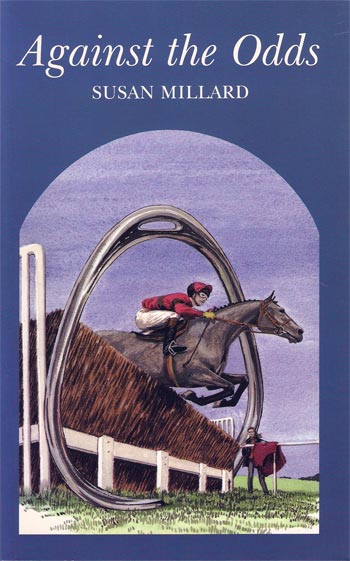
cover of Against the Odds
I'm preparing to work with an editor on a poetry pamphlet, "Ash Tree" which Prole Books have accepted for publication later this year. I'd known Brett and Phil for some time via the Great Writing Web site which Phil and I moderate. They have published several of what I've called "The Naomi poems" about the terminal illness of my grand-daughter who died in 2010. I was reluctant to offer them the whole sequence for fear of seeming to presume on their friendship. However, they have been very enthusiastic and I'm looking forward to working with Brett to polish the collection.

Having re-released "Against the Odds" this year as a digital edition, I'm working on a sequel. Twenty years on, my characters have developed and changed. Then they were working in racing, and expecting to move from racing and training into breeding racehorses. That hasn't gone to plan, and they've had to move north into a less affluent agricultural area of Cumbria. With their children now in their late teens and becoming ambitious themselves, there is plenty of scope for explosions!

Q. How do you spend your leisure time?


When I'm not writing or designing web sites, I carriage-drive one or other of my two Fell ponies, Ruby and Mr T.

 I also enjoy playing the harp - not a gilded concert monster, I hasten to add! When I was a teenager I used to sing in a folk band, and this is a folk harp with 34 strings. It stands about 3 foot 6 (1 metre) tall and makes a most lovely sound.

Q. Do you write for a local audience or a global audience?


*whispers* I write for me. I write the books I would like to read, and just hope that other people also enjoy them.

Q. Can you provide links to your work?


Of course! All the following pages have links to purchase and/or read a sample on Amazon.

COACHMAN

The Forthright Saga

Dragon Bait

Against the Odds

One Fell Swoop

Hoofprints in Eden


Other authors who are taking part in this blog hop


Geoff Smith

Helen Riebold

Linda Gruchy


Monday, March 25, 2013

Historical Novelists' 4 Day Book Fair, 12 - 15 April 2013

Historical Novelists' 4 Day Book Fair


Blogfest coming up!

I'm preparing a post in order to join in the Historical Novelists' 4 Day Book Fair.

And don't forget that the digital editions of COACHMAN, THE FORTHRIGHT SAGA and DRAGON BAIT are at a discounted price on Amazon until the end of the Easter holidays: $2.99 or the GBP equivalent of approx. £2.72. Curl up by the fire and enjoy driving a Victorian coach, flying with a dragon, or solving a Cumbrian crime without getting cold!

Sunday, March 24, 2013

Interviewed by Maria Grace

Maria Grace has kindly featured an interview with me on her blog "Random Bits of Fascination"